ROUNDUP
Quiet, portable units that actually leave room in the gear bin.
Last updated
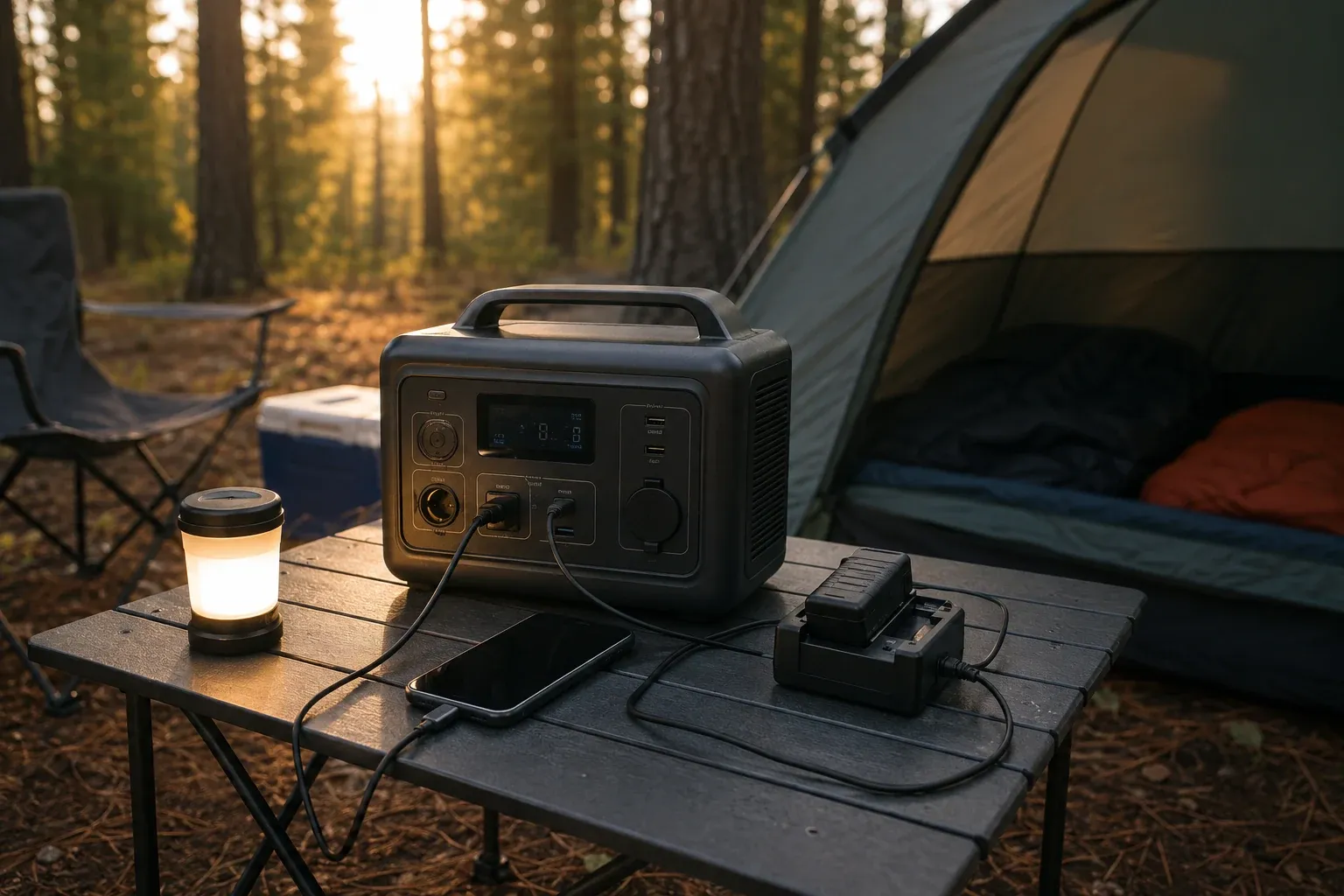
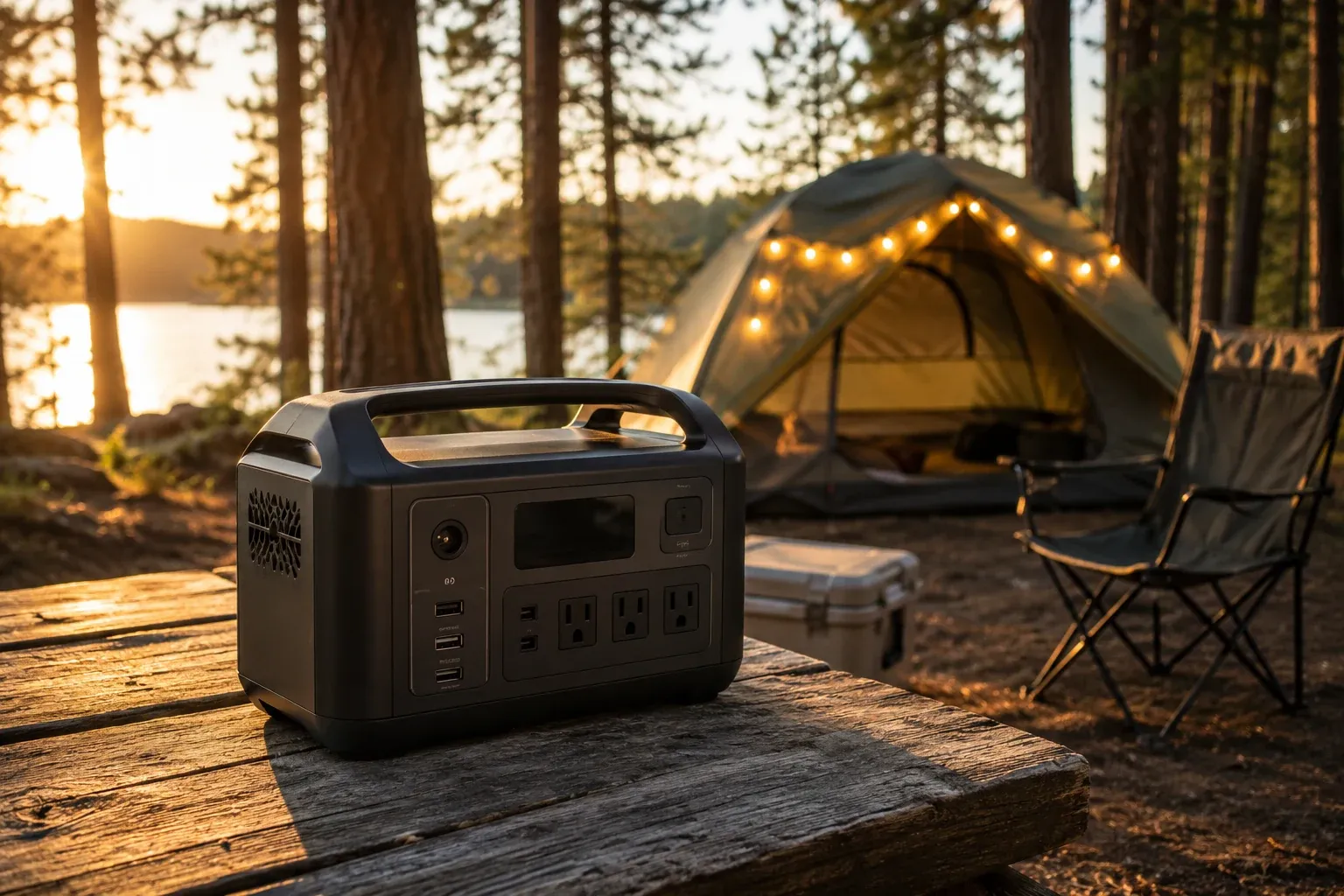
Camping puts different demands on a power station than home backup. Weight, volume, and noise are the constraints — not raw capacity. A 30-pound 1,000Wh unit that runs your phone, headlamp, and a portable fridge for two nights is a far better camping companion than a 50-pound 2,000Wh tower that takes up half your rear seat.
Camping is the use case where you don't want the biggest unit. A 500–1,000Wh station at 12–25 pounds covers a weekend for one or two people without wrecking your back. Above 25 pounds you're car-camping only.
Critical for trips longer than one or two nights. Look for a unit that accepts 100–200W of solar input via a standard MC4 connector — that's enough to keep a 1,000Wh station topped up indefinitely on most multi-day trips.
Cooling fans are the camping killer. Several mid-range units have overly aggressive fan curves that are loud enough to be unwelcome inside a tent. We measure fan noise in decibels at the load levels you would actually use camping.
Laptops, modern cameras, and several portable fridges charge over USB-C now. A 100W USB-C Power Delivery output replaces an AC adapter and the AC inverter's overhead, extending real-world runtime by 5–10%.
Most power stations are not weather-sealed. A few have IPX4 or better splash resistance — useful for a campsite in light rain or a beach trip. If you're tent camping in the wet, bring a stuff sack.
For tent camping, target 300–1,000Wh and under 20 pounds. For car camping, 1,000–2,000Wh is comfortable. RV power needs are a different category — see our RV and van life page.
Coverage focuses on the 300–1,500Wh segment from EcoFlow (River series), Jackery (Explorer 300/500/1000), Bluetti (AC60, AC180), and Anker SOLIX (C300, C1000). We measure:
See how we test for the full methodology.
Yes. Portable power stations are lithium battery devices, not combustion engines, and produce no exhaust. They are safe to use inside a tent. The only practical consideration is fan noise on units that discharge under heavy load.
A modern CPAP without humidifier averages 30–60W. A 500Wh power station runs a typical CPAP for around 8 hours; a 1,000Wh unit gets two nights from a single charge. Add 25% to the load if you use the heated humidifier.
A 100W portable solar panel is the practical sweet spot for camping use. It charges a 500–1,000Wh power station in 5–8 hours of good sun, weighs around 5 pounds, and folds flat enough to fit behind a backpack.
No, not in checked baggage and not as carry-on for anything over 100 watt-hours. The FAA's 100Wh threshold rules out every power station you would actually take camping. Plan to drive or to rent one at the destination.
LiFePO4 chemistry stops accepting a charge below 32°F. Discharging is fine down to about 0°F but capacity drops 10–20%. For winter camping, keep the unit inside the tent or vehicle rather than on the ground.