REVIEW
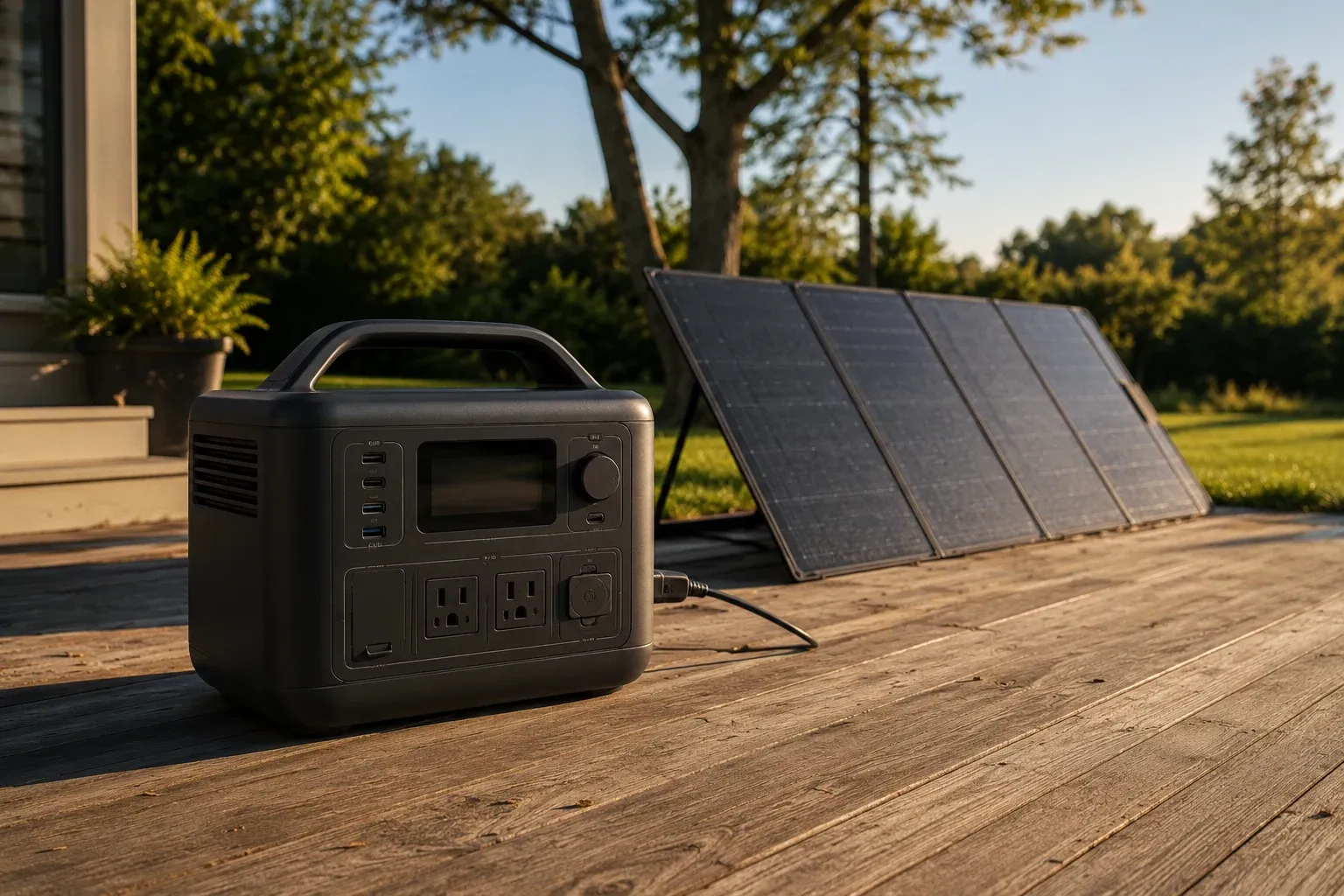
A power station and a solar panel, working together — the practical answer to off-grid power.
Last updated
"Solar generator" is a category created by marketing. A solar generator is a portable power station paired with one or more portable solar panels — sold either as a bundle or as separate components. There is no internal combustion, no fuel, and no exhaust. Just a lithium battery, an MPPT solar charge controller, and an inverter.
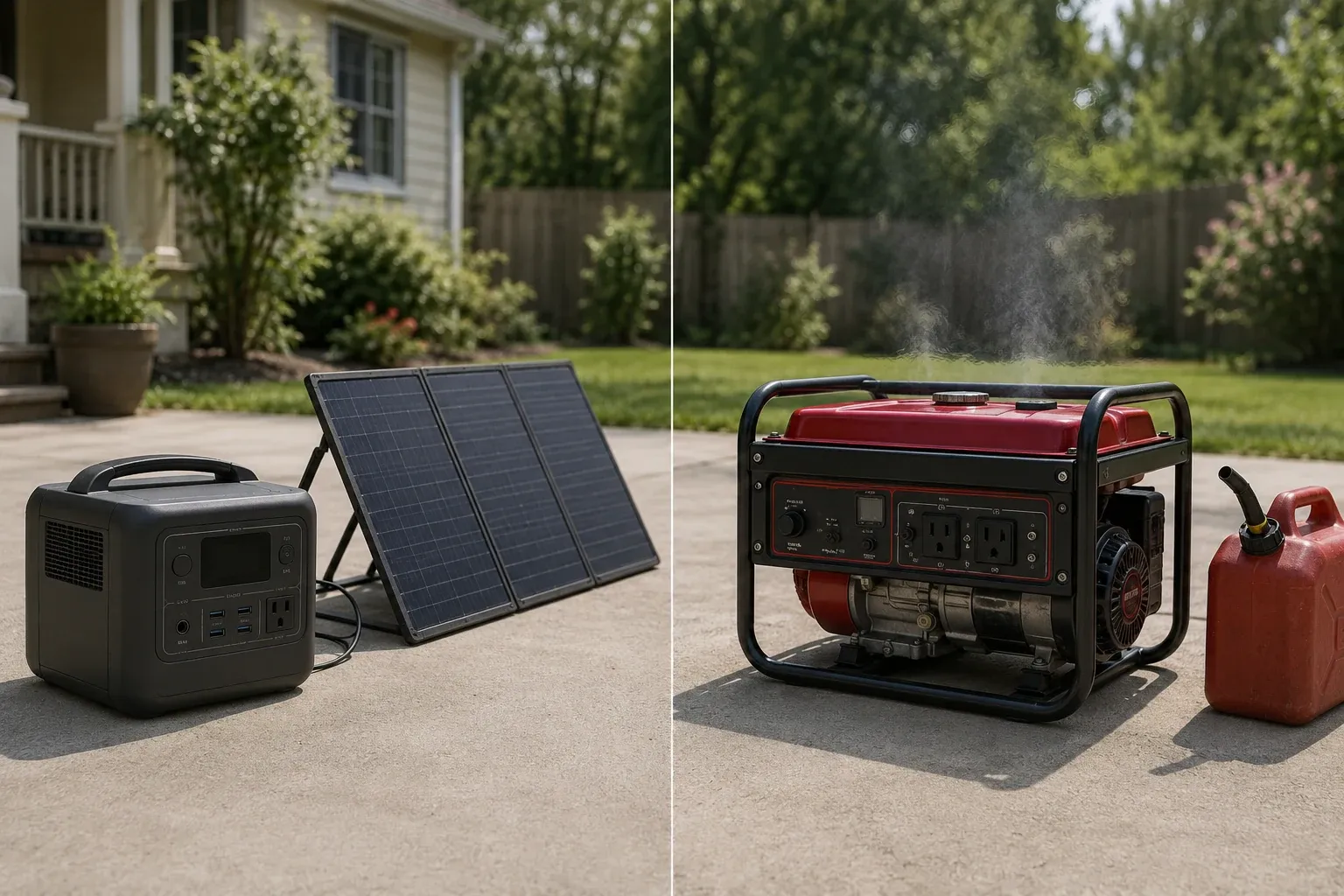
The confusion comes from the word "generator." A traditional generator produces electricity from gasoline. A solar generator stores electricity it received from the sun. They serve different roles even when they put out similar wattage.
Solar generators are the right tool for:
They are the wrong tool for jobs that need sustained 5,000W+ output for hours (well pumps, electric water heaters, full HVAC). A 7–10kW gas inverter generator is faster and cheaper for those loads.
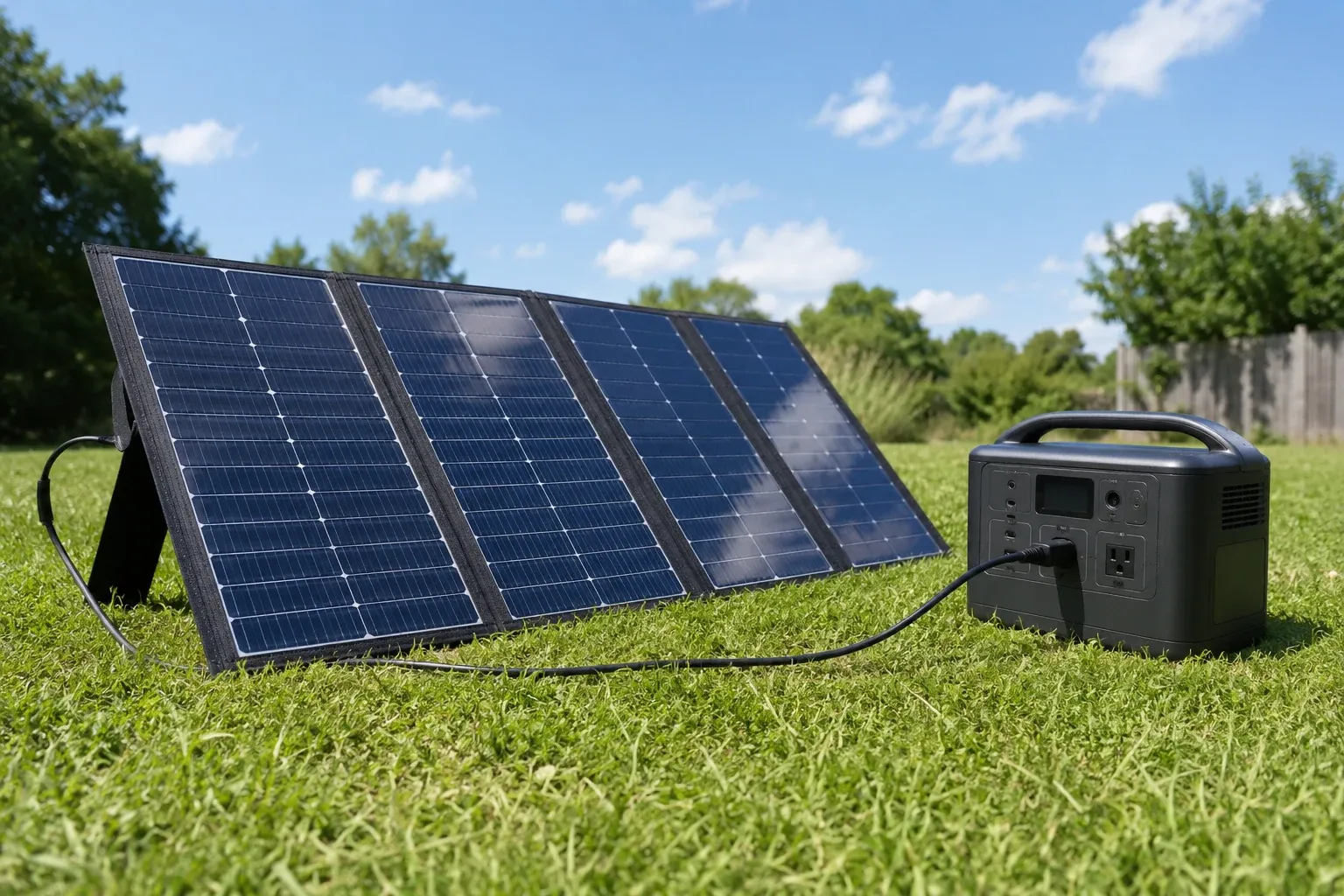
The portable solar panel needs to match the power station's solar input rating. A 400W solar input on the unit means panels totaling up to 400W — exceed that and you're spending money the unit can't use. Voltage matching matters too: the panel's open-circuit voltage must fall inside the power station's MPPT range.
The watt-hour figure that matters is what you'll actually draw, not the worst case. For a fridge plus lights plus phones plus laptops over 24 hours, a 2,000–3,000Wh station with 400W of solar is a practical "indefinite off-grid for essentials" setup.
A 400W panel array doesn't produce 400W of power. Real-world output averages 60–75% of nameplate under good conditions and falls off fast on overcast days. For the Pacific Northwest in winter, double the panel wattage. For the desert Southwest in summer, the nameplate is closer to reality.
Every credible solar generator now uses MPPT (Maximum Power Point Tracking) charge controllers. If a spec sheet says PWM (Pulse Width Modulation), the unit is outdated — MPPT is 20–30% more efficient.
For solar generators meant to last, LiFePO4 batteries are the standard. They cycle 3,000+ times to 80% capacity, tolerate partial charge states well, and aren't a fire risk.
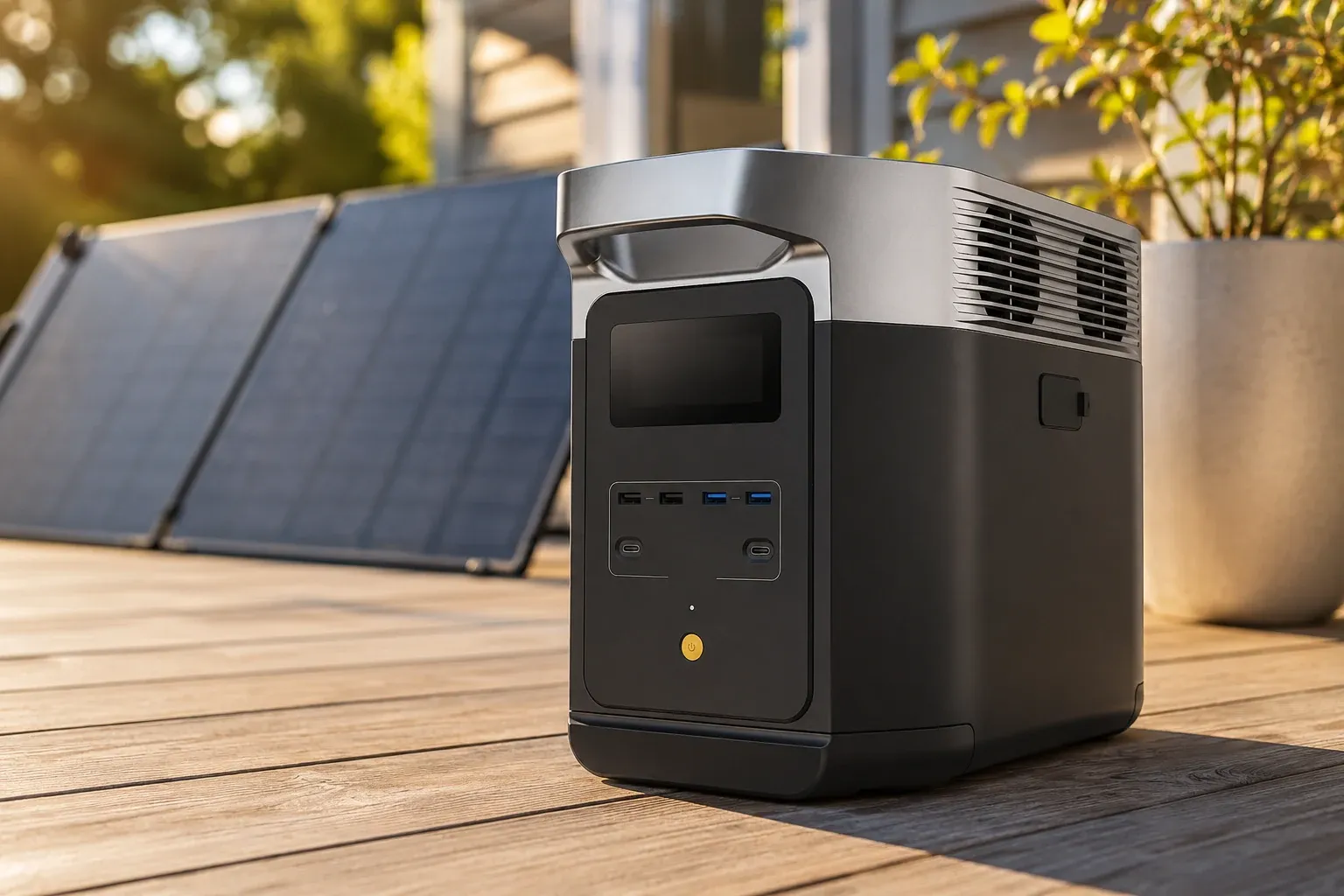
Several manufacturers (EcoFlow, Bluetti, Anker) sell expansion batteries that plug into the main station, doubling or tripling capacity. If you might need more capacity later, an expandable unit is better than a fixed one.
Foldable solar panels are the practical choice for portable solar generators. Look for IP67-rated junction boxes, MC4 connectors (the industry standard), and integrated stands. Rigid panels are cheaper per watt but harder to deploy in the field.
| Solution | Best for | Worst at |
|---|---|---|
| Portable solar generator | Quiet off-grid power, indoor use, emergency backup | Sustained high-wattage loads |
| Gas generator | Whole-house essentials during multi-day outages | Quiet zones, indoor use, long-term storage |
| Grid-tied home solar + battery | Permanent home energy independence | Portability |
The solar generator fills a specific niche: portable, silent, indoor-safe energy that can be recharged anywhere there's daylight.
Solar generator coverage focuses on bundles and pairings:
See the full testing methodology. Use-case guides for home backup, camping, and RV and van life cover the same gear from those specific angles.
A 1,000Wh power station with a 200W solar panel takes 6–8 hours in direct sun. A 2,000Wh station with 400W of solar takes the same. The real-world figure is typically 20–30% slower than the math suggests due to panel angle, cloud cover, and charge controller efficiency.
A 2,000–4,000Wh solar generator can power the essentials in a house — fridge, lights, internet, small electronics, medical equipment — but cannot run central air conditioning, electric water heaters, or electric ranges. Whole-house solar requires a permanent rooftop array and a home battery system.
Solar generators are worth it if you value quiet, indoor-safe, fuel-free power and accept that they cost more per watt-hour than a gas generator. For sustained high-wattage loads, a gas generator is more cost-effective. For occasional outages or off-grid trips, a solar generator pays back in convenience and safety.
A power station is the battery and inverter unit. A solar generator is the same unit paired with a solar panel for recharging. The terms are used loosely in marketing — many 'solar generators' sold as kits are simply a power station with a bundled solar panel.
A modern LiFePO4 solar generator retains 80% capacity after roughly 3,000 charge cycles. If you fully discharge and recharge it once a week, that's about 60 years of cell life. In practice, the inverter, charge controller, or cooling fan will fail before the cells do — expect 10–20 years of useful service.