The short answer
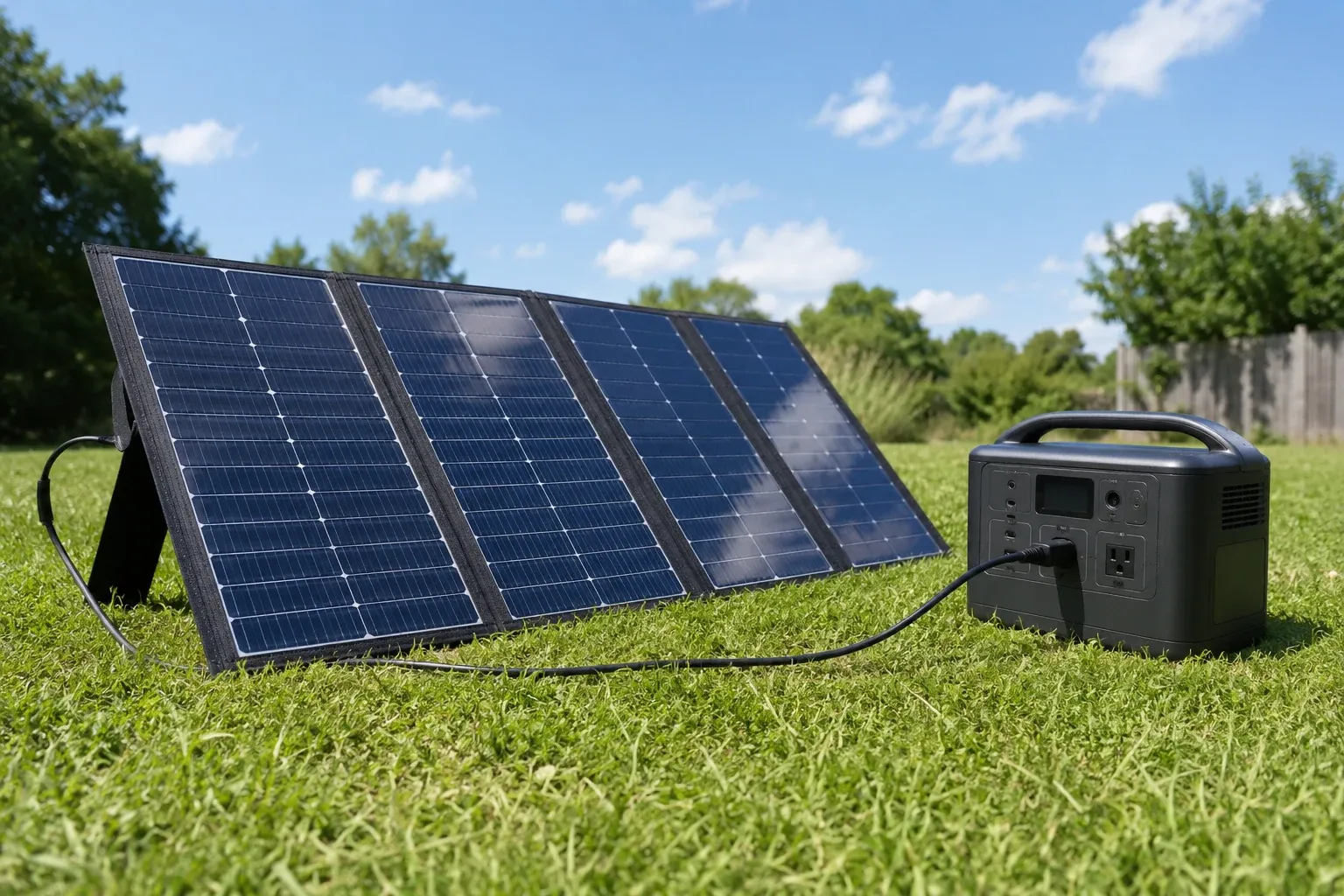
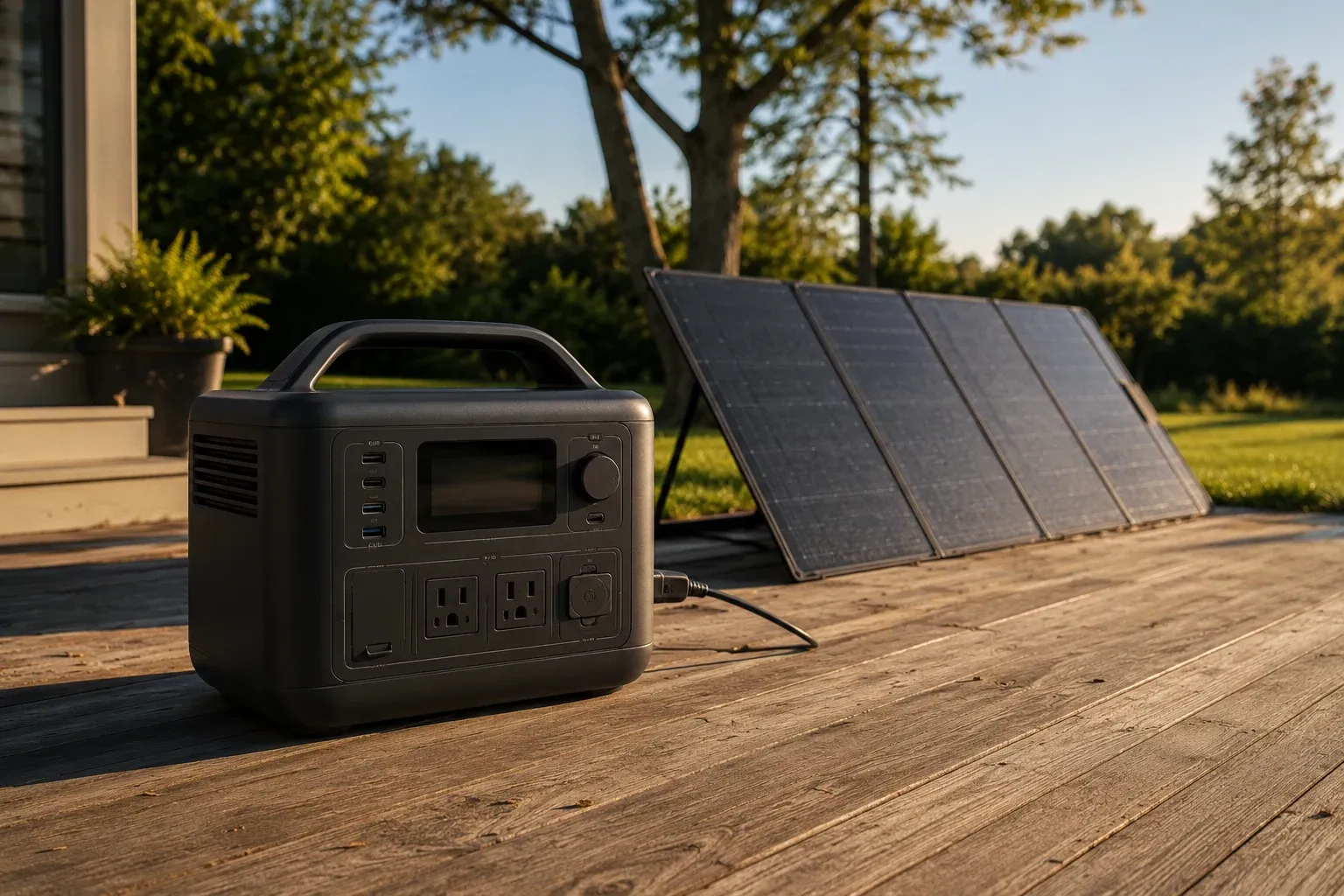
A solar power generator is a portable power station paired with solar panels, and the spec that separates the good ones is not capacity — it is the solar input ceiling, which decides how fast the sun can refill the battery. For most buyers the EcoFlow Delta 2 is the best overall pick: a 500W solar input that matches a real two-panel array, expansion to 3,040Wh, and a charge controller that keeps working through passing cloud. The Anker SOLIX C1000 is the value alternative, with an even higher 600W input at the lowest price in its class.
For sustained off-grid living, the Jackery Explorer 2000 v2 carries a 1,400W solar input in a unit light enough to move. For home backup on solar, the EcoFlow Delta Pro steps into whole-home territory with a 1,600W input and 3,600Wh of expandable capacity. New to how panels and stations fit together? Start with our solar panel pairing guide.
Top picks at a glance
- Best Overall: EcoFlow Delta 2
- Best Value: Anker SOLIX C1000
- Best High-Capacity: Bluetti AC200L
- Best for Off-Grid Living: Jackery Explorer 2000 v2
- Best for Whole-Home Backup: EcoFlow Delta Pro
- Best Mid-Range: Bluetti AC180
- Best Lightweight: Jackery Explorer 1000 v2
- Best Expandable: EcoFlow Delta 2 Max
Comparison table
| Unit | Capacity | Solar input | Inverter | Weight |
|---|---|---|---|---|
| EcoFlow Delta 2 | 1,024 Wh | 500 W max | 1,800 W continuous | 27 lbs |
| Anker SOLIX C1000 | 1,056 Wh | 600 W max | 1,800 W continuous | 28.4 lbs |
| Bluetti AC200L | 2,048 Wh | 1,200 W max | 2,400 W continuous | 62 lbs |
| Jackery Explorer 2000 v2 | 2,042 Wh | 1,400 W max | 2,200 W continuous | 39.7 lbs |
| EcoFlow Delta Pro | 3,600 Wh | 1,600 W max | 3,600 W continuous | 99 lbs |
| Bluetti AC180 | 1,152 Wh | 500 W max | 1,800 W continuous | 37 lbs |
| Jackery Explorer 1000 v2 | 1,070 Wh | 400 W max | 1,500 W continuous | 23.8 lbs |
| EcoFlow Delta 2 Max | 2,048 Wh | 1,000 W max | 2,400 W continuous | 50 lbs |
Best Overall Solar Generator
EcoFlow Delta 2
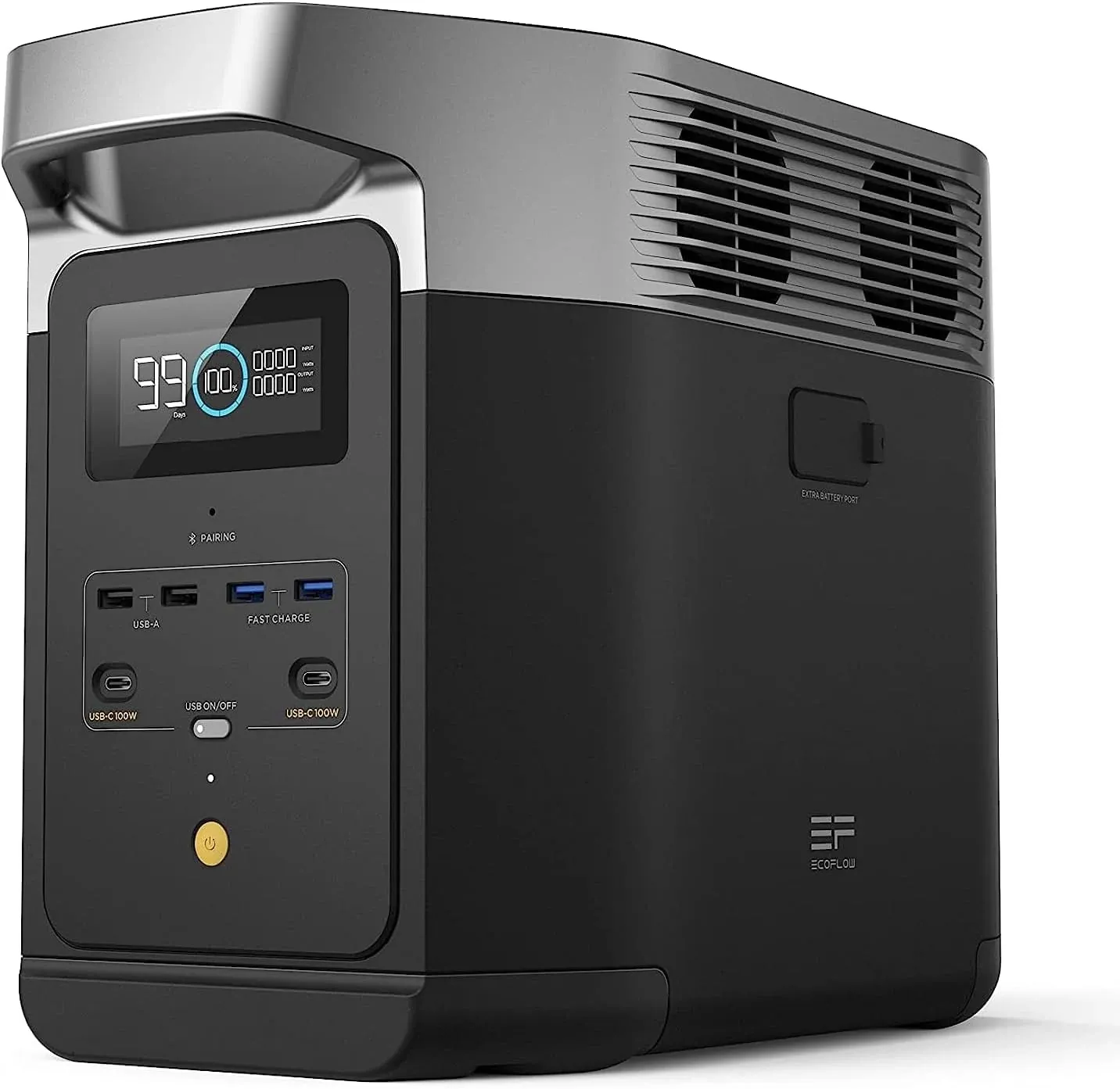
The Delta 2 is the unit that defined what a solar generator should be: a 500W MPPT input that pairs cleanly with two 200W panels, expansion that takes capacity to 3,040Wh, and a charge controller that is genuinely good at extracting power from imperfect sun. It is the one we point most buyers toward first.
- Capacity
- 1,024 Wh (LiFePO4, expandable to 3,040 Wh)
- Solar input
- 500 W max (11–60V MPPT)
- Solar recharge
- ~3–4 hrs from 400W of panels
- Inverter
- 1,800 W continuous · 2,700 W surge (X-Boost 2,200 W)
- Weight
- 27 lbs
- Warranty
- 5 years
Why it works as a solar generator
On the solar side the Delta 2 does the important things right. The 500W input ceiling matches a realistic two-panel array, the MPPT range is wide enough to accept most foldable panels in series, and the controller holds its tracking through passing cloud rather than dropping out. Add the expansion battery and the same panels keep refilling a larger reservoir — useful when you grow from weekend trips into longer off-grid stays.
Pros
- 500W solar input with a wide, forgiving MPPT range
- Expandable to 3,040Wh on the same panel setup
- Fast AC fallback charging (0–80% in ~50 min) for cloudy stretches
- Excellent app with live solar-input telemetry
- LiFePO4 cells, 5-year warranty
Cons
- Cooling fan is audible under sustained high AC load
- Promo pricing swings — wait for a sale before checkout
- Base capacity is modest without the add-on battery
The bottom line: The default recommendation. If you want one solar generator that does everything competently and grows with you, the Delta 2 is it.
Check price on Amazon →Best Value
Anker SOLIX C1000
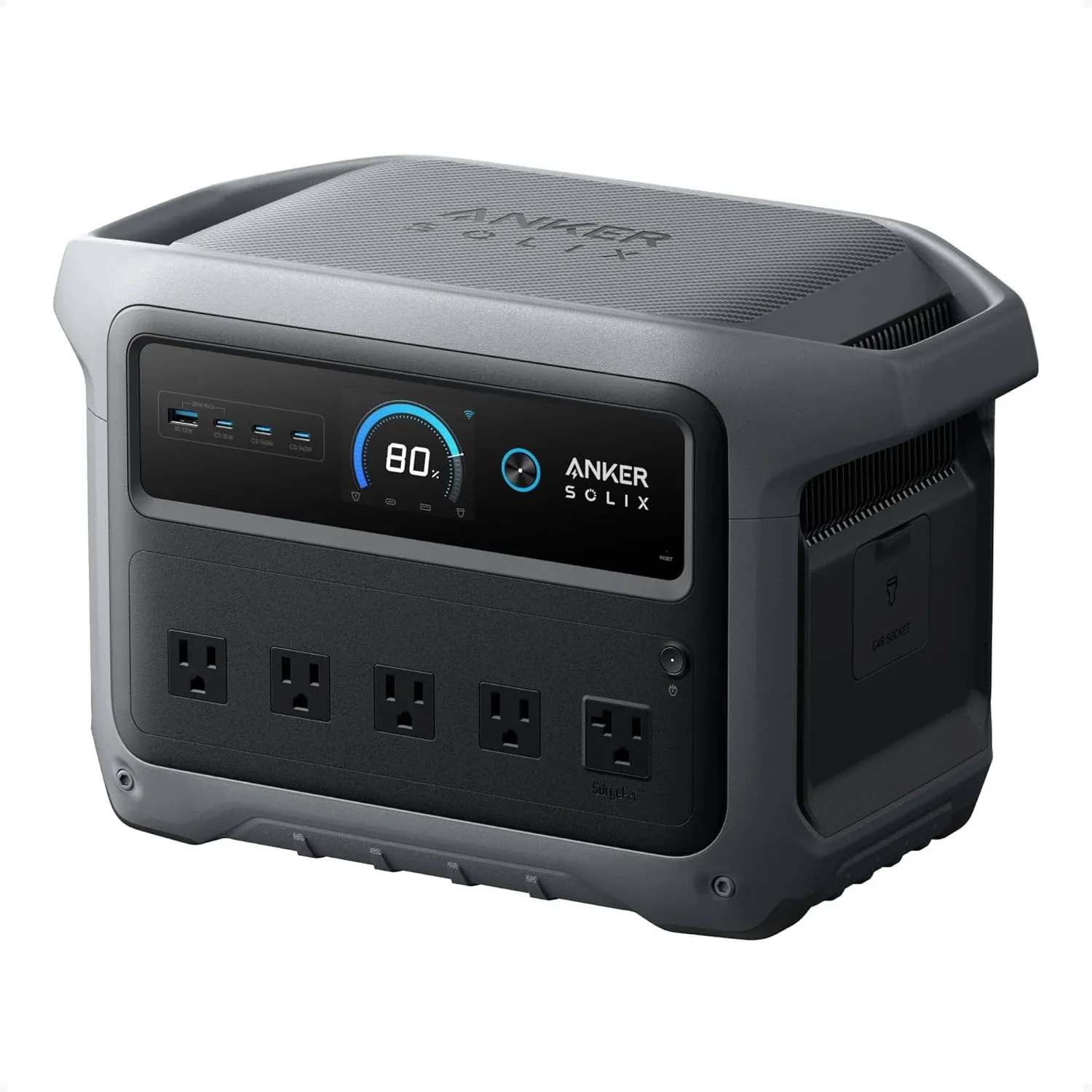
Anker undercut the category and then handed it the highest solar input in the 1,000Wh class. The SOLIX C1000 accepts 600W of panels — more than units costing significantly more — and is reliably the lowest price of the mainstream options.
- Capacity
- 1,056 Wh (LiFePO4)
- Solar input
- 600 W max (11–60V MPPT)
- Solar recharge
- ~2.5–3.5 hrs from 600W of panels
- Inverter
- 1,800 W continuous · 2,400 W surge
- Weight
- 28.4 lbs
- Warranty
- 5 years
Why it works as a solar generator
The 600W solar input is the headline, and it matters: it lets the C1000 refill faster than its rivals and leaves room to add a third panel as your needs grow. For a solar-first buyer building a system on a budget, that ceiling plus the low entry price is the strongest value proposition here. The trade is a slightly lower surge rating, which only bites on the largest compressor loads.
Pros
- 600W solar input — the highest in the 1,000Wh class
- Lowest price of the mainstream solar generators
- UltraFast AC charging as a cloudy-day fallback
- Compact footprint for the capacity
- LiFePO4, 5-year warranty
Cons
- 2,400W surge can trip on the largest fridge compressors
- App is functional but less polished than EcoFlow
- Anker's own panels are priced less aggressively than the unit
The bottom line: The value pick, and the best solar input per dollar in its class. If budget leads the decision, start here.
Check price on Amazon →Best High-Capacity Solar Generator
Bluetti AC200L
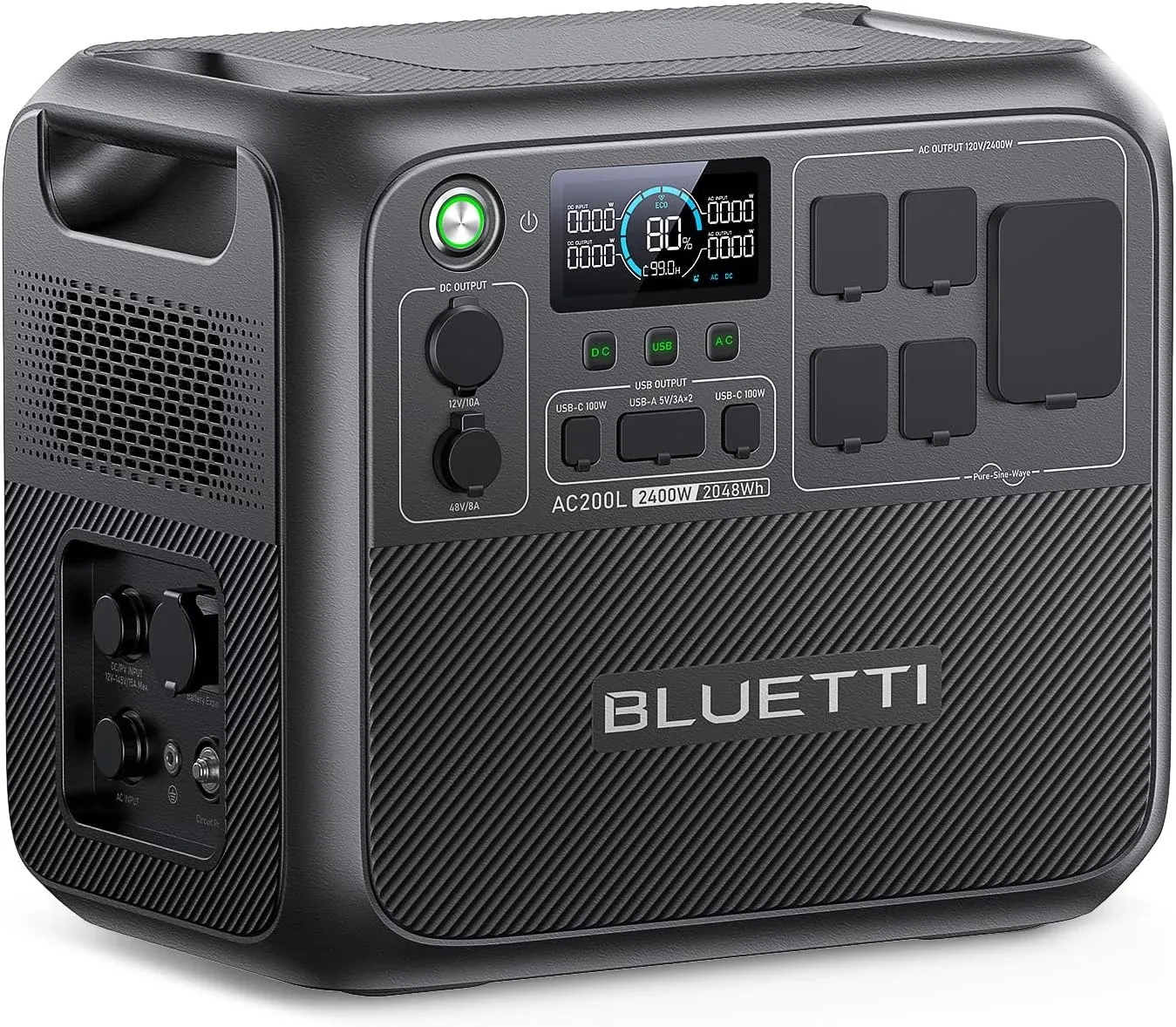
When the load list grows past devices and a fridge, the 1,000Wh class runs out of room. The AC200L doubles the capacity, accepts a full 1,200W of solar, and expands to 8,192Wh — enough to take a household off-grid for essentials indefinitely with a matching panel array.
- Capacity
- 2,048 Wh (LiFePO4, expandable to 8,192 Wh)
- Solar input
- 1,200 W max
- Solar recharge
- ~2–2.5 hrs from 1,200W of panels
- Inverter
- 2,400 W continuous · 3,600 W surge (Power Lifting 3,600W)
- Weight
- 62 lbs
- Warranty
- 5 years
Why it works as a solar generator
The 1,200W solar input is the reason to buy this over a smaller unit: it can absorb six 200W panels and refill 2,048Wh in a couple of hours of strong sun, which means it keeps up with sustained daily use instead of slowly losing ground. Paired with expansion batteries, the same array services a much larger reservoir — the closest a portable solar generator gets to whole-home essentials.
Pros
- 1,200W solar input absorbs a large panel array
- Expandable to 8,192Wh for serious off-grid capacity
- 2,400W inverter starts and runs demanding loads
- Wheels and pull handle make 62 lbs manageable
- LiFePO4, 5-year warranty
Cons
- 62 lbs is a two-hands-and-a-plan unit
- Premium price, typically $1,400–1,800 at retail
- Fan ramps up under heavy AC load
The bottom line: The high-capacity choice. Buy it when your loads exceed the 1,000Wh class and you want a solar input ceiling that genuinely keeps up.
Check price on Amazon →Best for Off-Grid Living
Jackery Explorer 2000 v2
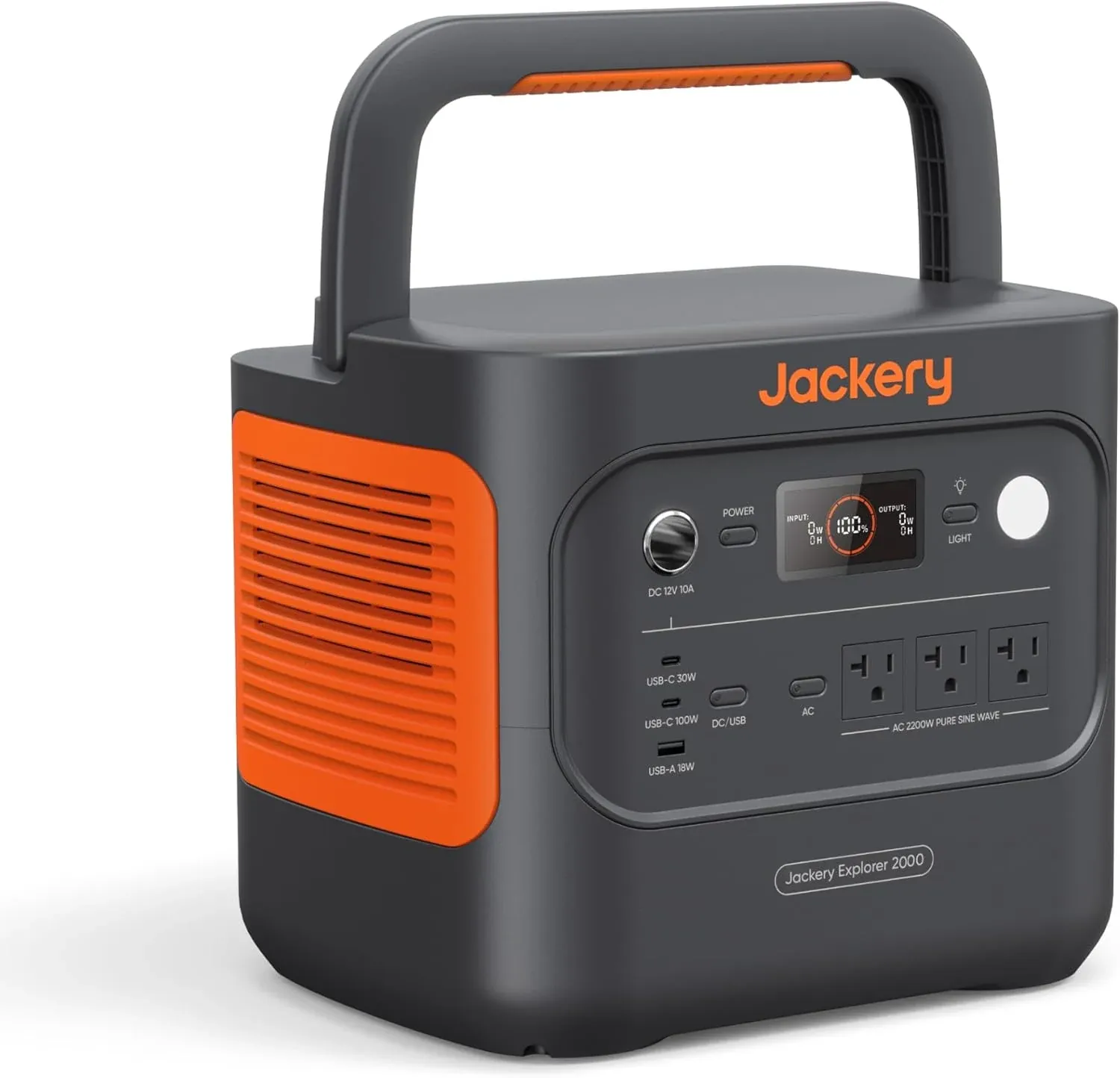
Jackery's second-generation 2000Wh unit is the lightest in its class and carries the strongest solar input here relative to weight — 1,400W into a 39.7-pound package. For off-grid living where you both move the unit and rely on the sun, it is the best balance in this roundup.
- Capacity
- 2,042 Wh (LiFePO4)
- Solar input
- 1,400 W max
- Solar recharge
- ~2 hrs from 1,400W of panels
- Inverter
- 2,200 W continuous · 4,400 W surge
- Weight
- 39.7 lbs
- Warranty
- 5 years
Why it works as a solar generator
The 1,400W solar input is unusually high for the capacity and weight, which means the Explorer 2000 v2 refills faster than heavier rivals and supports a three-panel array without strain. The 4,400W surge starts almost anything, and at under 40 pounds it is the rare 2,000Wh unit you can actually reposition to chase the sun. For full-time off-grid use that balance is hard to beat.
Pros
- 1,400W solar input — strongest in its weight class
- Lightest 2,000Wh unit at 39.7 lbs
- 4,400W surge starts heavy loads cleanly
- Quiet under typical sustained loads
- LiFePO4, 5-year warranty
Cons
- No expansion battery — fixed at 2,042Wh
- Premium price tracks the AC200L
- Slower AC fallback charging than EcoFlow
The bottom line: The off-grid pick. Best when you want serious solar input in a unit light enough to move and aim at the sun.
Check price on Amazon →Best for Whole-Home Backup
EcoFlow Delta Pro
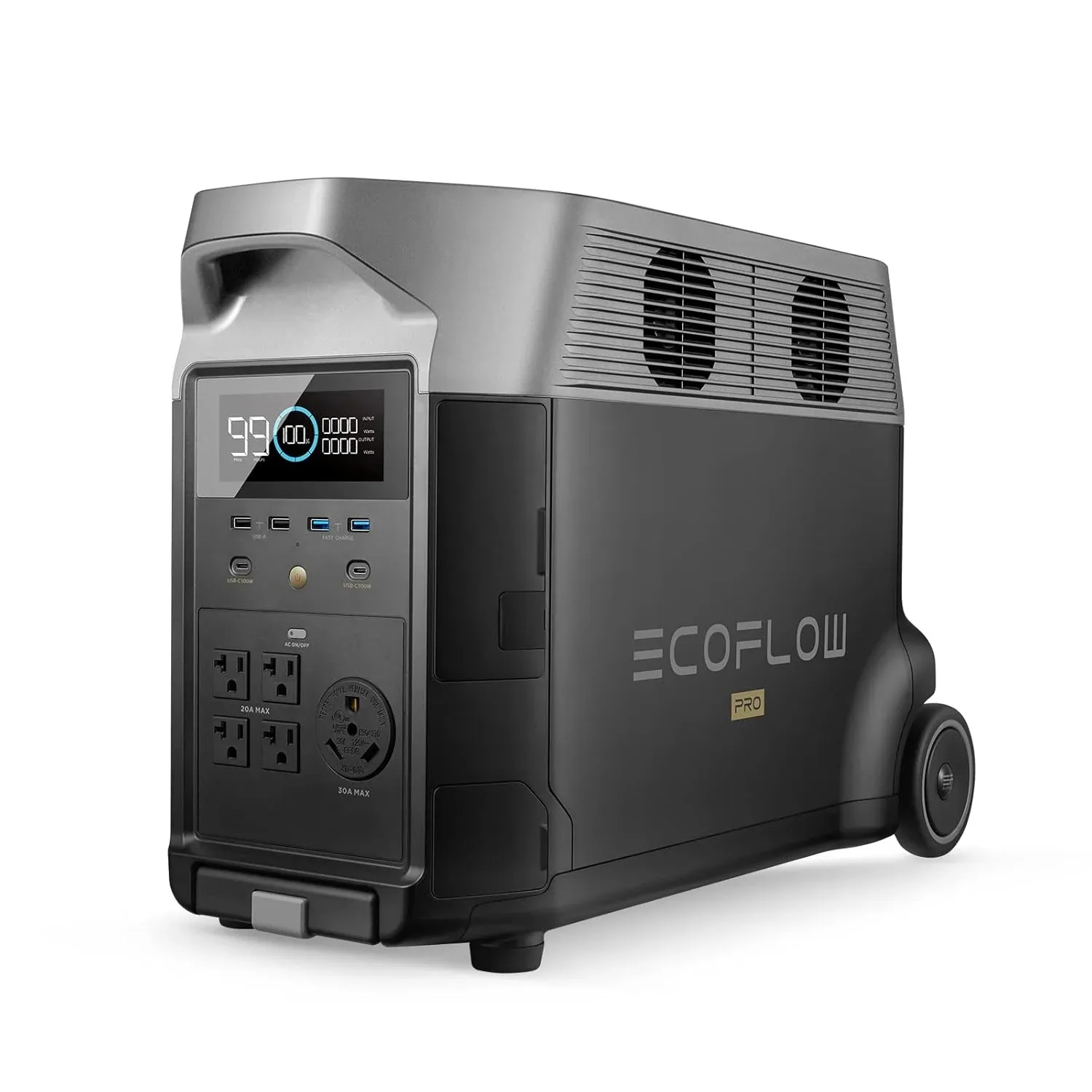
The Delta Pro is where a solar generator stops being camping gear and starts being a home energy system. 3,600Wh of base capacity, a 3,600W inverter that runs nearly anything in a 30-amp setup, a 1,600W solar input, and expansion that scales into legitimate whole-home territory.
- Capacity
- 3,600 Wh (LiFePO4, expandable to 25 kWh)
- Solar input
- 1,600 W max
- Solar recharge
- ~2.5–3 hrs from 1,600W of panels
- Inverter
- 3,600 W continuous · 7,200 W surge
- Weight
- 99 lbs
- Warranty
- 5 years
Why it works as a solar generator
The 1,600W solar input is the largest here, capable of absorbing a serious rooftop or ground array and refilling 3,600Wh in an afternoon of good sun. Chain expansion batteries and the same array feeds a reservoir measured in kilowatt-hours — enough to carry a home through extended outages on solar alone, the way a permanent battery system would, without the installation.
Pros
- 1,600W solar input — the highest in this roundup
- 3,600W inverter runs whole-home essentials
- Expands into kilowatt-hour, whole-home territory
- Wheels and pull handle for a 99-lb unit
- LiFePO4, 5-year warranty
Cons
- 99 lbs — this lives in one place and stays there
- Premium price even for the capacity class
- The loudest unit here under high load
The bottom line: The home-energy choice. Buy it when solar is meant to carry a household, not a campsite.
Check price on Amazon →Best Mid-Range Portable
Bluetti AC180
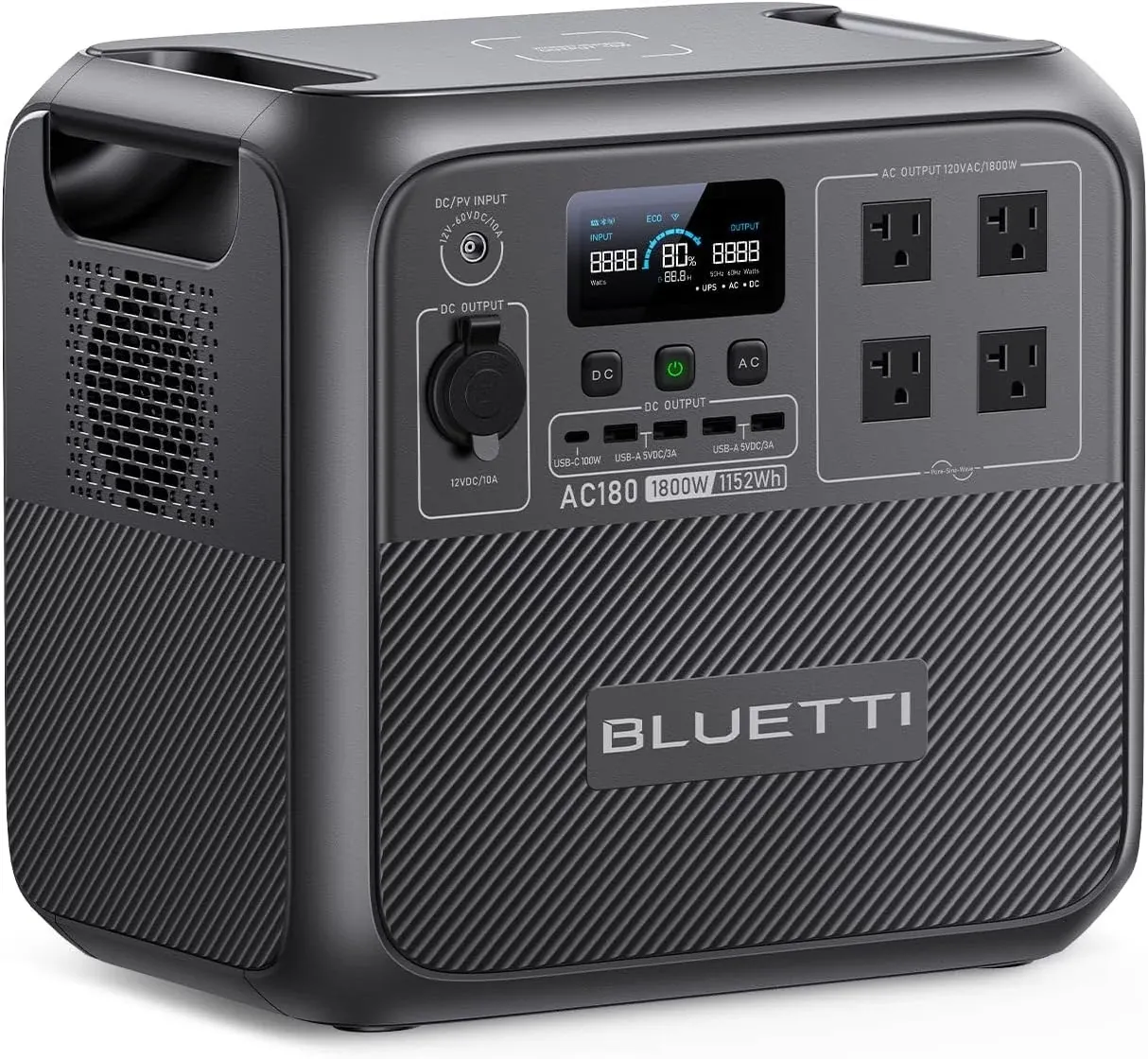
The AC180 is the dependable middle of the field — slightly more capacity than the 1,000Wh norm, a 500W solar input, and a 2,700W surge that handles a residential fridge. It does not lead any single spec, which is precisely why it suits buyers who want no weak points.
- Capacity
- 1,152 Wh (LiFePO4)
- Solar input
- 500 W max (12–60V MPPT)
- Solar recharge
- ~3–4 hrs from 500W of panels
- Inverter
- 1,800 W continuous · 2,700 W surge
- Weight
- 37 lbs
- Warranty
- 5 years
Why it works as a solar generator
A 500W solar input with a wide MPPT range makes the AC180 an easy panel match, and its 1,152Wh capacity gives a little more buffer for the cloudy afternoon than the 1,000Wh units around it. There is no app and no expansion, but for a straightforward solar setup that just works, the lack of complexity is part of the appeal.
Pros
- 500W solar input with a wide MPPT range
- Slightly larger 1,152Wh buffer than 1,000Wh rivals
- Quiet at idle and light loads
- Strong 2,700W surge for the price
- LiFePO4, 5-year warranty
Cons
- No app or remote monitoring
- No expansion option
- 37 lbs is heavier than the Jackery 1000 v2
The bottom line: The no-weak-points mid-range pick. A solid solar generator for buyers who value reliability over headline specs.
Check price on Amazon →Best Lightweight Solar Generator
Jackery Explorer 1000 v2
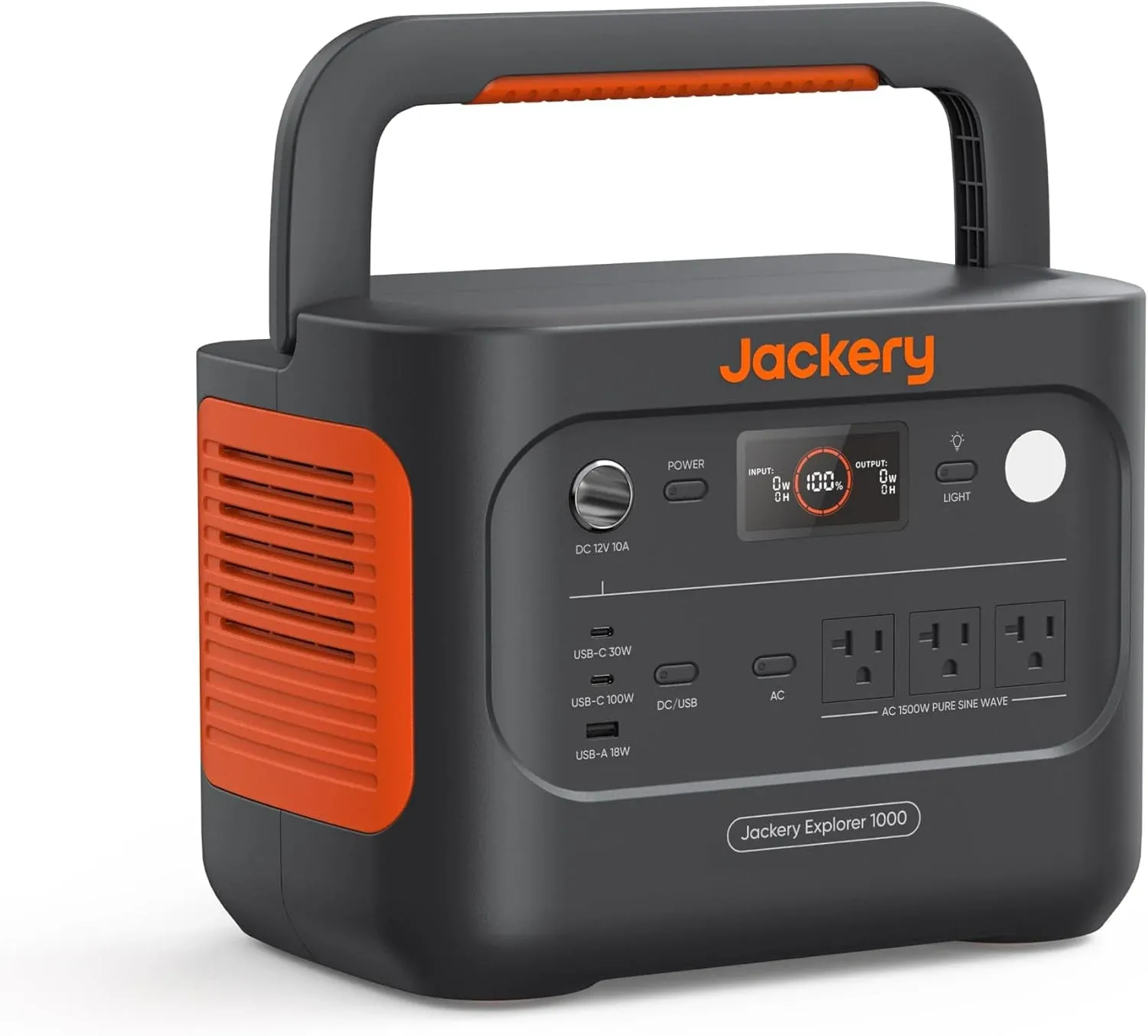
At 23.8 pounds the Explorer 1000 v2 is the lightest LiFePO4 unit in its class, which makes it the solar generator you actually carry — to the campsite, between the truck and the trailhead, in and out of the house. Its one limit is the solar input, which decides who it fits.
- Capacity
- 1,070 Wh (LiFePO4)
- Solar input
- 400 W max (11–39V MPPT)
- Solar recharge
- ~5–6 hrs from 400W of panels
- Inverter
- 1,500 W continuous · 3,000 W surge
- Weight
- 23.8 lbs
- Warranty
- 5 years
Why it works as a solar generator
The 400W solar input is the lowest in this roundup, and it is the spec to weigh. For weekend trips where you deploy 200W of panel and recharge fully in a day, it is invisible. For multi-week off-grid use where solar is the primary refill path, the ceiling caps your daily replenishment below the units above it. The full breakdown is in our Jackery Explorer 1000 v2 review.
Pros
- Lightest LiFePO4 unit in its class at 23.8 lbs
- 3,000W surge despite the modest continuous rating
- Clean app with charge-state and runtime read
- LiFePO4, 5-year warranty
- Quiet thermostatic fan
Cons
- 400W solar input — the lowest here, a real limit for heavy solar use
- No expansion option
- Premium price for the capacity
The bottom line: The lightweight pick. Best when you carry the unit often and your solar needs are weekend-scale, not multi-week.
Check price on Amazon →Best Expandable System
EcoFlow Delta 2 Max
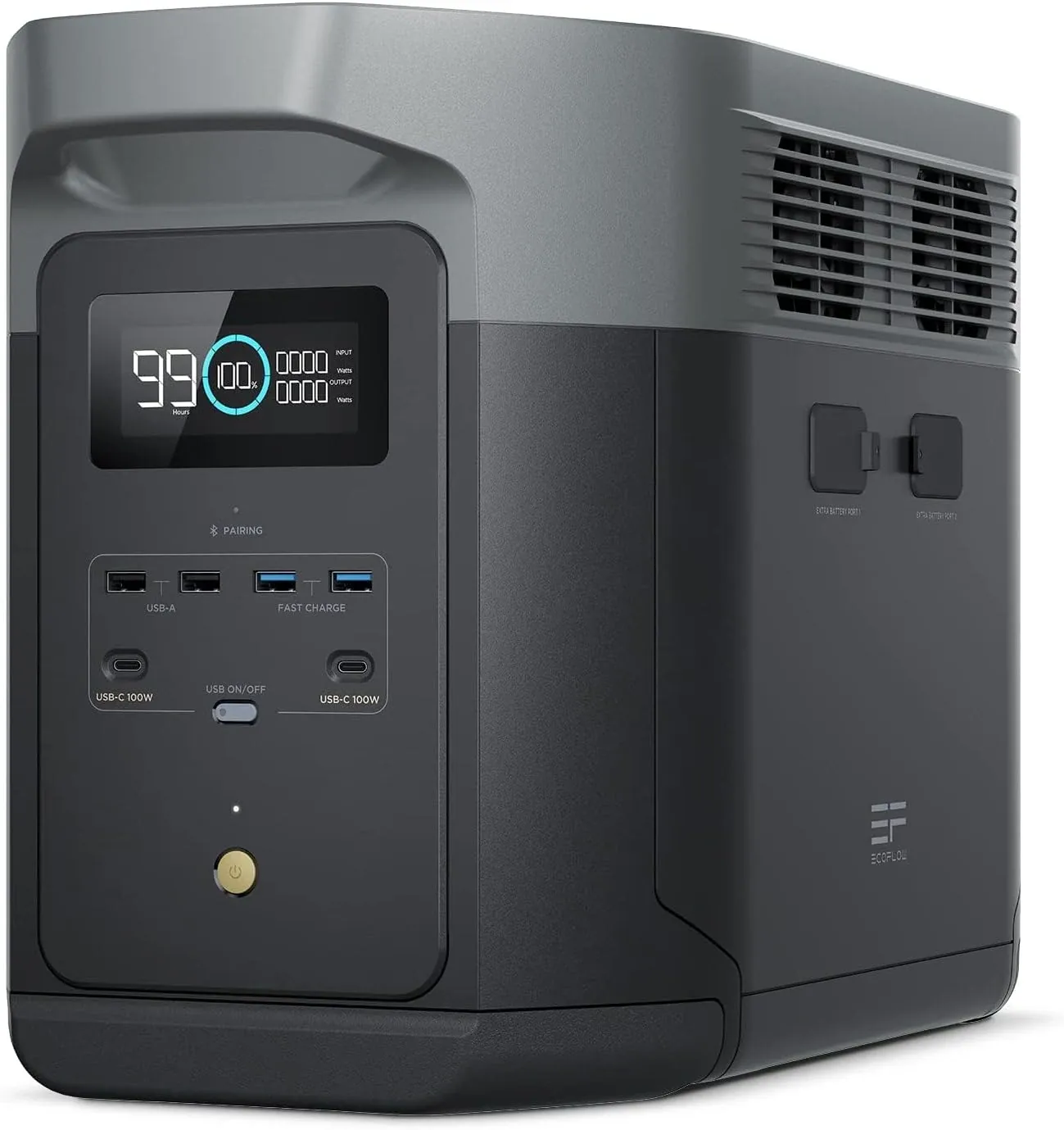
The Delta 2 Max scales the Delta 2 formula — same fast charging, same X-Boost, same app — to 2,048Wh and a 1,000W solar input, with expansion to 6,144Wh. It is the unit to buy if you expect your solar needs to grow.
- Capacity
- 2,048 Wh (LiFePO4, expandable to 6,144 Wh)
- Solar input
- 1,000 W max
- Solar recharge
- ~2.5–3 hrs from 1,000W of panels
- Inverter
- 2,400 W continuous · 3,400 W surge (X-Boost 3,100 W)
- Weight
- 50 lbs
- Warranty
- 5 years
Why it works as a solar generator
A 1,000W solar input pairs with up to five 200W panels and refills the unit in an afternoon, and the expansion path means the same array can later feed 6,144Wh. X-Boost lets it run resistive loads up to 3,100W by voltage reduction. For a buyer who wants to start at 2,000Wh and grow into a larger solar system on one platform, it is the most flexible choice here.
Pros
- 1,000W solar input with expansion to 6,144Wh
- X-Boost runs resistive loads up to 3,100W
- Fast AC fallback charging
- Best-in-class EcoFlow app and ecosystem
- LiFePO4, 5-year warranty
Cons
- Solar input lower than the Jackery 2000 v2
- 50 lbs without the wheels of the AC200L
- Volatile pricing — wait for a sale
The bottom line: The expandable pick. Best when you want to start at 2,000Wh and scale the same platform as your solar setup grows.
Check price on Amazon →How to choose a solar power generator
Solar input is the spec that matters most
Two solar generators with identical capacity can behave completely differently off-grid, and the reason is the solar input ceiling — the maximum wattage the unit can pull from panels at once. A 1,000Wh unit with a 600W input refills far faster, and supports a larger array, than one capped at 400W. For any setup where the sun is the primary recharge path, the input ceiling decides whether you keep up with daily use or slowly lose ground. It is the first number to read, ahead of capacity.
Match capacity to your daily draw
Capacity is how long you run between recharges. Add up what you power in a day, then size the battery to cover roughly a day of use with the panels topping it up. Devices and lights need 500–1,000Wh; a fridge plus electronics over 24 hours wants 2,000Wh; home backup or sustained off-grid living starts at 3,000Wh. Oversizing capacity without matching solar input just gives you a big battery that recharges slowly.
The panels have to match the unit
A solar generator only performs if the panels are paired correctly: total wattage at or below the input ceiling, panel voltage inside the unit’s MPPT window, and a matching connector. Get the voltage wrong and the unit will not charge at all. The full method — including the voltage math that trips up most first-time buyers — is in our solar panel pairing guide.
Recharge speed and the cloudy-day fallback
Solar is variable, so the best units pair a strong solar input with fast AC charging as a backup for the day the sun does not show. EcoFlow leads on AC fallback speed; the others are competitive. A unit that can refill quickly from a wall outlet before you leave, then run on solar in the field, removes most off-grid range anxiety.
LiFePO4 chemistry and expandability
Every unit here uses LiFePO4 cells rated for 3,000+ cycles — the right choice for a device meant to last a decade. If you expect your needs to grow, favor an expandable model (the Delta 2, Delta 2 Max, AC200L, and Delta Pro all add batteries) so the same panels can later feed a larger reservoir without replacing the unit.
Which size for your use
The right pick depends less on the brand and more on how you use it:
| Use case | Recommended pick | Why |
|---|---|---|
| Weekend camping / devices | Jackery Explorer 1000 v2 + 200W | Lightest to carry, refills in a day on a single panel. The 400W ceiling never bites at weekend scale. |
| Best all-round solar setup | EcoFlow Delta 2 + 400W | The 500W input, forgiving MPPT, and expansion path cover the widest range of uses for the money. |
| Budget solar-first build | Anker SOLIX C1000 + 600W | Highest solar input in its class at the lowest price — the most panel headroom per dollar. |
| Multi-day / multi-week off-grid | Jackery Explorer 2000 v2 + 800W | 1,400W input keeps a 2,000Wh reservoir topped up through sustained use, and it stays light enough to move. |
| Home backup on solar | EcoFlow Delta Pro + 1,200W | 3,600Wh, a 3,600W inverter, and a 1,600W solar input carry household essentials through extended outages. |
| Start small, grow later | EcoFlow Delta 2 Max + 1,000W | Begin at 2,048Wh and expand to 6,144Wh on the same panels and platform as needs grow. |
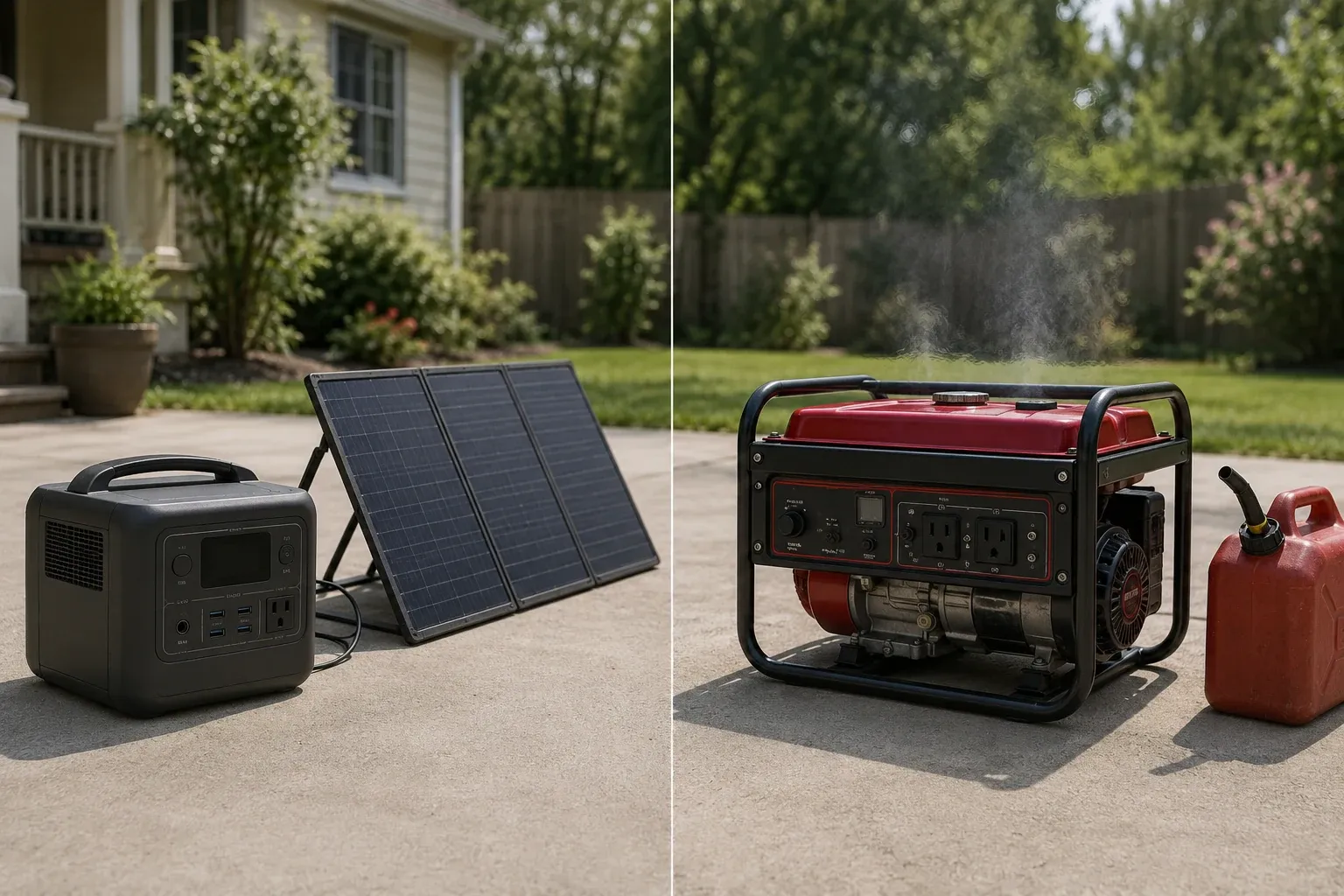
For the off-grid and travel angle specifically, see our best solar generators for RVs roundup; for the indoor side, the home backup guide; and for how solar generators stack up against fuel-burning units, our solar vs gas generator comparison.
Frequently asked questions
What is the best solar power generator overall?
For most buyers the EcoFlow Delta 2 is the best overall solar generator: a 500W solar input that matches a realistic two-panel array, expansion to 3,040Wh, fast fallback charging for cloudy days, and a charge controller that holds its tracking through passing cloud. The Anker SOLIX C1000 is the value alternative with an even higher 600W solar input at a lower price.
How big a solar generator do I need?
Match capacity to your daily draw. For devices and lights, 500–1,000Wh is enough. For a fridge plus electronics over a day, 2,000Wh. For home backup or sustained off-grid living, 3,000Wh and up, paired with solar to refill. Then check the solar input ceiling is high enough to replace your daily use — that spec matters more than capacity for solar-first setups.
How long does a solar generator take to charge from solar?
It depends on the panel array and the unit’s solar input ceiling. A 1,000Wh unit with 400W of panels refills in roughly 3–4 hours of strong sun; a 2,000Wh unit with 1,200–1,400W of solar refills in about 2 hours. Real-world panel output runs 60–75% of nameplate, so plan for the longer end on hazy days.
Do solar generators come with solar panels?
Some are sold as bundles with matching panels; many are sold as the power station alone, with panels bought separately. Buying the station and panels separately often gives a better price and lets you size the array to your needs. Either way, confirm the panel wattage and voltage match the station’s solar input — our solar panel pairing guide covers the math.
Are solar generators worth it?
For quiet, fuel-free, indoor-safe power that recharges from the sun, yes — a solar generator is worth it for outage backup, camping, and off-grid use, and it is often cheaper to own over a decade than a gas generator for intermittent use. It is not worth it for sustained whole-house high-wattage loads, where a gas generator or permanent battery system is the better tool.
What battery chemistry should a solar generator use?
LiFePO4 (lithium iron phosphate). Every unit in this roundup uses it. LiFePO4 cells cycle 3,000+ times to 80% capacity — several times the life of older NMC lithium — tolerate heat better, and carry no thermal-runaway fire risk. In 2026 there is no reason to buy a solar generator with older chemistry.
Final verdict
The solar generator market has matured to the point where every unit in this roundup uses LiFePO4 cells, carries a five-year warranty, and pairs cleanly with panels. The differences come down to the solar input ceiling, capacity, weight, and expandability — and the right balance depends entirely on how you use it.
For most buyers, the EcoFlow Delta 2 is the best overall solar generator and the safest first purchase. Shop on price and the Anker SOLIX C1000 gives you more solar input per dollar than anything else. Need to take a household off-grid, and the Delta Pro is the closest portable solar gets to a home energy system. Match the unit to your sun and your loads, not to the biggest number on the box.