The short answer
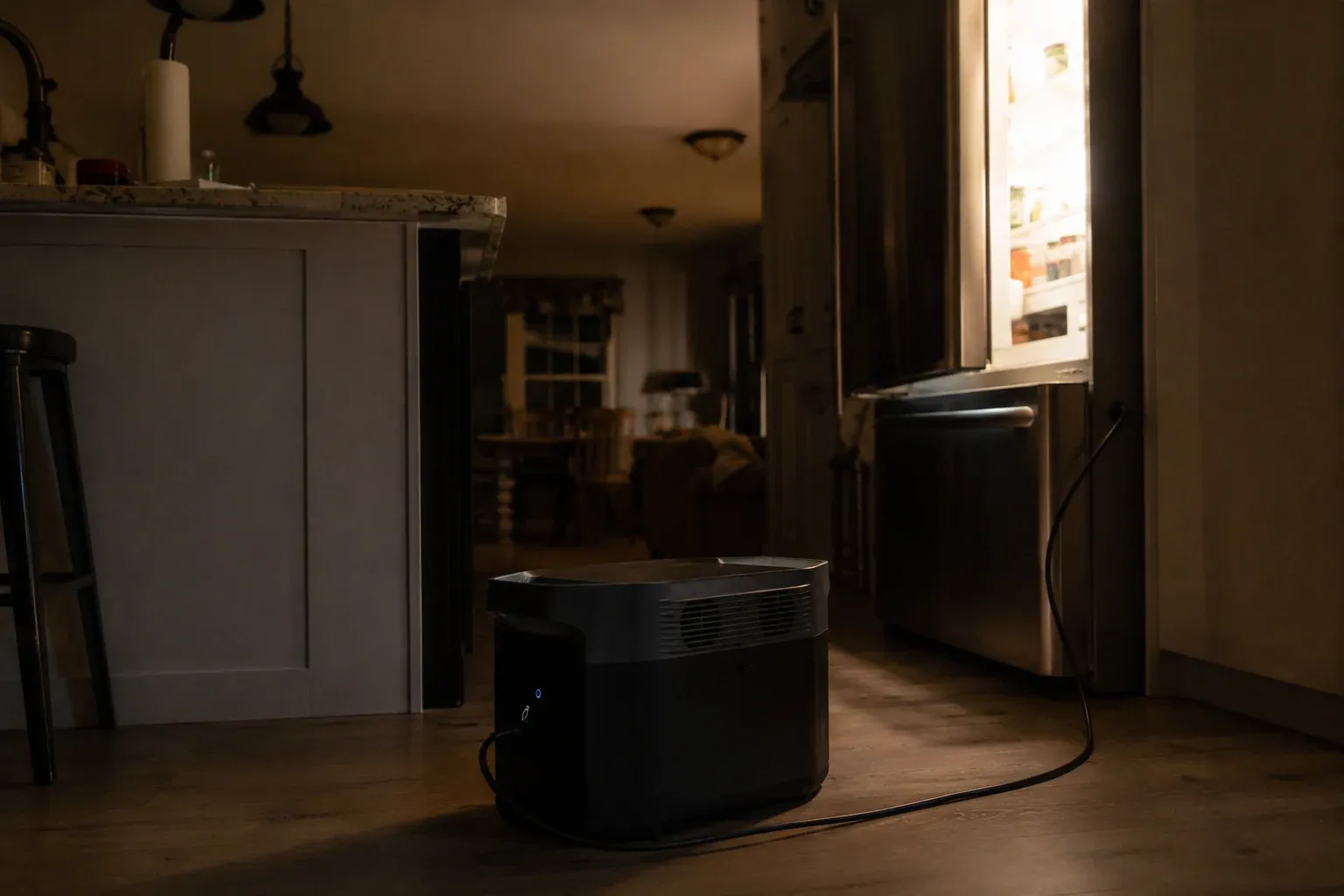
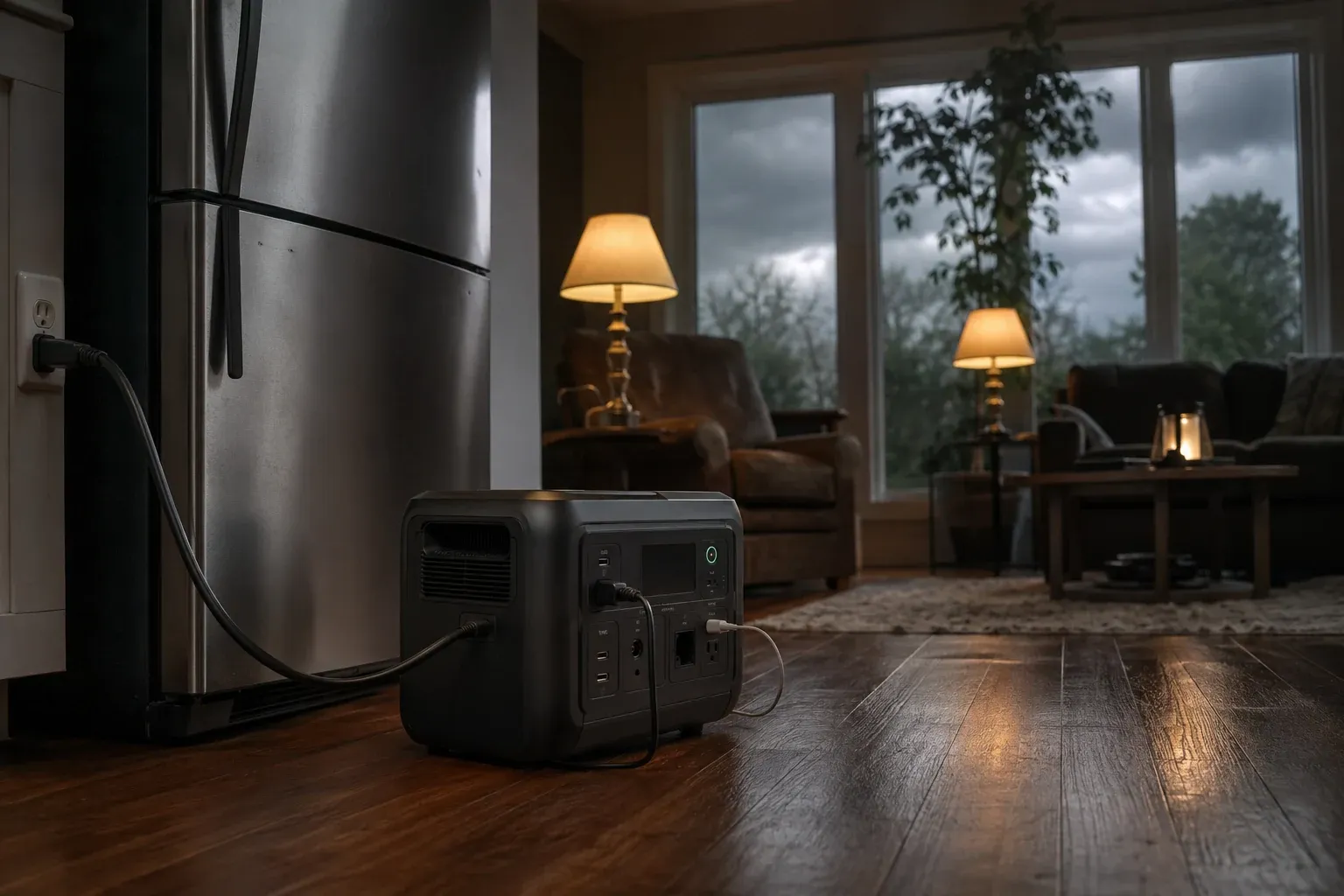
Home backup is the use case where the spec sheet actually decides everything. Portability barely matters — the unit sits in a utility room — but capacity, inverter surge, and recharge speed decide whether your fridge survives the outage and whether you're charged again before the next one. For most homes the Bluetti AC200L is the best all-round pick: 2,048Wh for a full day of essentials, a 2,400W inverter that runs nearly any household load short of HVAC, and a recharge so fast (~90 minutes) it's ready before the next storm band.
Need to back up more than essentials — a well pump, a chest freezer, several appliances at once? The EcoFlow Delta Pro (3,600Wh, 7,200W surge, expandable toward whole-home) is the strongest unit here. Outages that run for days? The EcoFlow Delta 2 Max leans into solar recharge and expansion. Just covering the fridge, internet, and lights in a short outage — or backing up an apartment? The Anker SOLIX C1000 and Jackery Explorer 1000 v2 do it for less. Not sure what you actually need? Our home backup buyer's guide covers the fundamentals first.
Top picks at a glance
- Best Overall for Home Backup: EcoFlow Delta Pro
- Best Expandable Mid-Capacity: Bluetti AC200L
- Best for Multi-Day Outages: EcoFlow Delta 2 Max
- Best 2,000Wh Value: Jackery Explorer 2000 v2
- Best Value Essentials: Anker SOLIX C1000
- Best Budget Expandable: EcoFlow Delta 2
- Best for Essentials Only: Bluetti AC180
- Best for Apartments & Small Spaces: Jackery Explorer 1000 v2
Comparison table
| Unit | Capacity | Inverter | AC recharge | Expandable |
|---|---|---|---|---|
| EcoFlow Delta Pro | 3,600 Wh | 3,600 W continuous | Up to 1,800 W AC | Yes |
| Bluetti AC200L | 2,048 Wh | 2,400 W continuous | Up to 2,400 W AC | Yes |
| EcoFlow Delta 2 Max | 2,048 Wh | 2,400 W continuous | Up to 1,900 W AC | Yes |
| Jackery Explorer 2000 v2 | 2,042 Wh | 2,200 W continuous | Up to 1,500 W AC | No |
| Anker SOLIX C1000 | 1,056 Wh | 1,800 W continuous | Up to 1,300 W AC | Yes |
| EcoFlow Delta 2 | 1,024 Wh | 1,800 W continuous | Up to 1,200 W AC | Yes |
| Bluetti AC180 | 1,152 Wh | 1,800 W continuous | Up to 1,440 W AC | No |
| Jackery Explorer 1000 v2 | 1,070 Wh | 1,500 W continuous | Up to 1,500 W AC | No |
Best Overall for Home Backup
EcoFlow Delta Pro
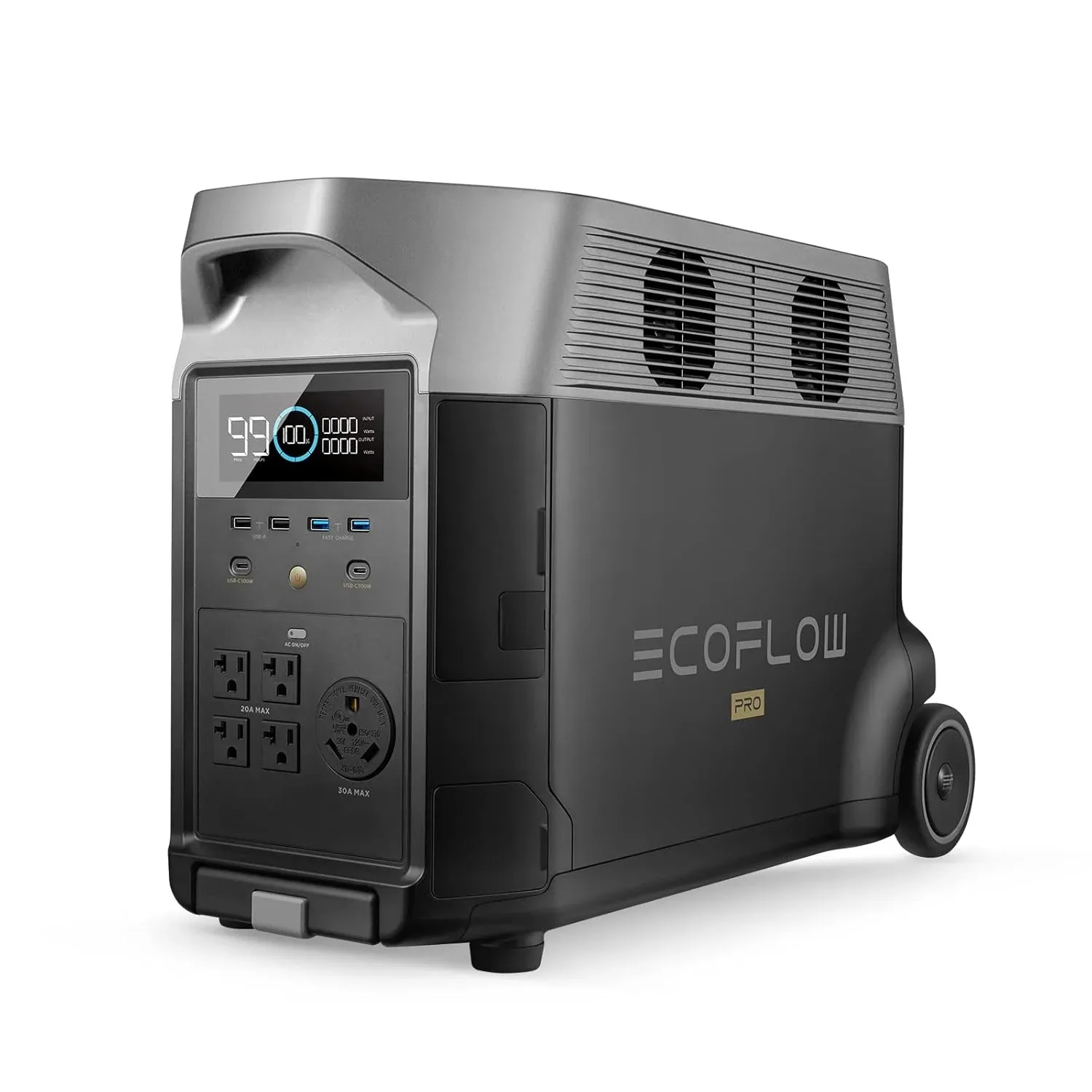
If you want one unit that backs up real loads — not just a phone and a lamp — the Delta Pro is the one I keep coming back to. 3,600Wh of usable storage and a 3,600W inverter mean it runs a refrigerator, a chest freezer, the internet, and lights at the same time without flinching, and it's the only unit here that scales toward genuine whole-home territory through EcoFlow's Smart Home Panel and extra batteries.
- Capacity
- 3,600 Wh (LiFePO4, expandable to 25 kWh)
- Inverter
- 3,600 W continuous · 7,200 W surge (X-Boost to 4,500 W)
- AC recharge
- Up to 1,800 W AC · ~2 hrs to full
- Solar input
- 1,600 W max
- Weight
- 99 lbs
- Warranty
- 5 years
Why it works for home backup
Home backup is a capacity-and-surge problem before it's anything else, and the Delta Pro answers both decisively. The 7,200W surge starts a deep-well pump or a fridge compressor without a stutter, and at 3,600Wh it carries a typical fridge-plus-essentials load through roughly a day and a half on its own — far longer with the expansion battery. It also accepts 1,600W of solar, so paired with panels it becomes an indefinite essentials backup. The catch is the obvious one: at 99 pounds it has wheels and a luggage handle because you are not carrying it. This is a unit you site once, near the panel or the gear it backs up, and leave.
Pros
- 3,600Wh and 3,600W inverter — runs multiple real appliances at once
- 7,200W surge handles well pumps and big compressors
- Scales toward whole-home via Smart Home Panel + extra batteries
- 1,600W solar input for true off-grid essentials backup
- LiFePO4 cells, 5-year warranty
Cons
- 99 lbs — wheeled, but a two-person lift up stairs
- Expansion batteries and the Smart Home Panel add real cost
- Overkill for apartment or short-outage needs
The bottom line: The home-backup default if you want to cover more than the bare essentials. Highest capacity, highest surge, and the only real expansion path to whole-home here.
Check price on Amazon →Best Expandable Mid-Capacity
Bluetti AC200L
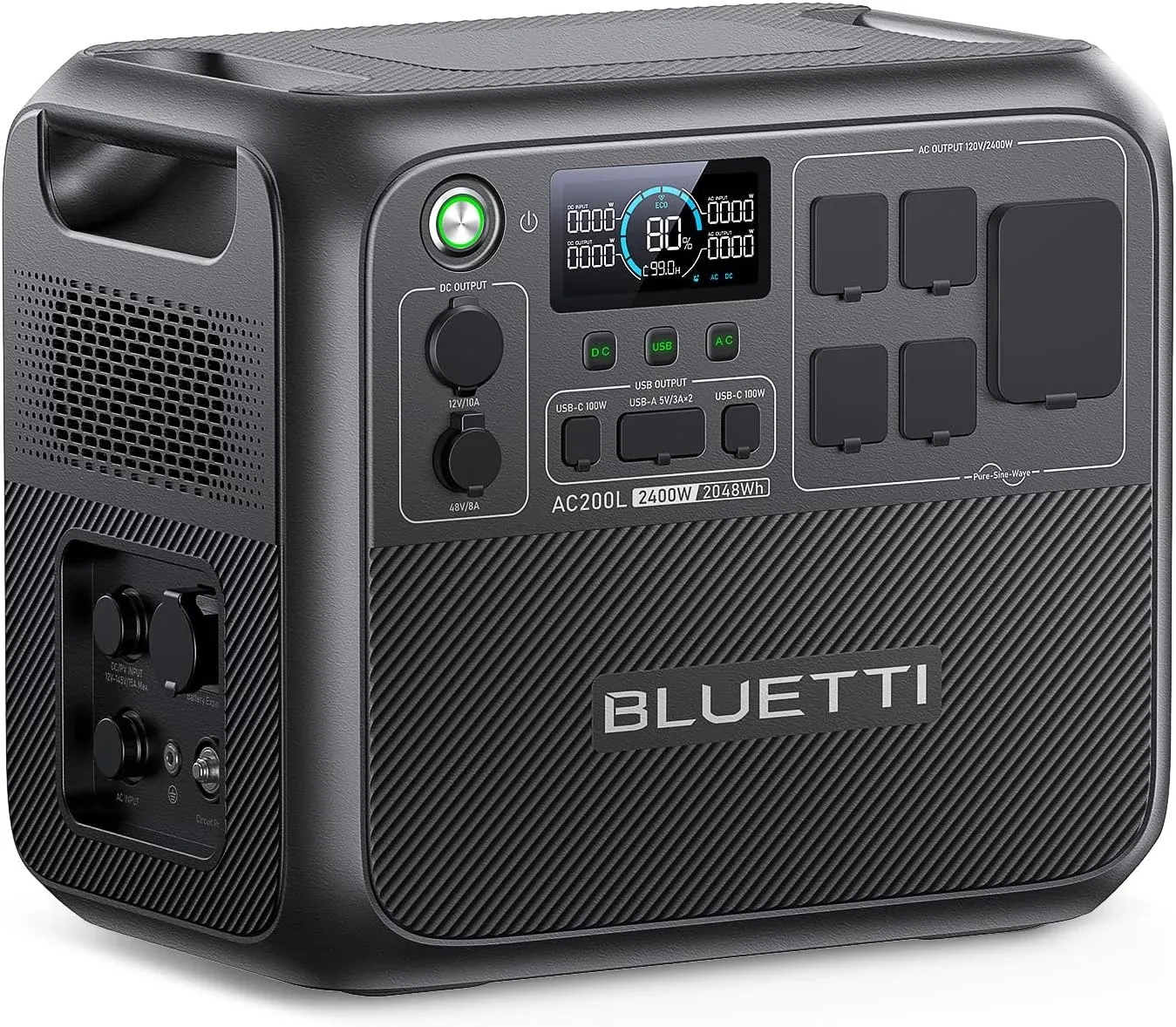
The AC200L is the unit I point most homeowners toward first. 2,048Wh covers a full day of essentials, the 2,400W inverter runs nearly anything short of a heat pump or electric range, and the standout is the recharge: at up to 2,400W it refills from empty in about an hour and a half, so it's ready before the next band of a storm rolls through. Add B300K packs and it climbs to 8,192Wh.
- Capacity
- 2,048 Wh (LiFePO4, expandable to 8,192 Wh)
- Inverter
- 2,400 W continuous · 3,600 W surge (Power Lifting to 3,600 W resistive)
- AC recharge
- Up to 2,400 W AC · ~1.5 hrs to full
- Solar input
- 1,200 W max
- Weight
- 62 lbs
- Warranty
- 5 years
Why it works for home backup
What makes the AC200L a smart home-backup buy is the balance — and the recharge speed in particular, which is the spec people forget until the second outage in two days catches them at 30%. A 2,400W charge rate is faster than almost anything at this capacity. The 20ms UPS switchover keeps a desktop, router, or modem alive seamlessly when the grid drops, which matters if you work from home or run a medical device. At 62 pounds it's a one-person lift for a strong back over a short distance, and the expansion path means you can start at 2kWh and grow to a multi-day system without rebuying the inverter.
Pros
- Fast 2,400W AC recharge — full in ~1.5 hrs between outages
- 20ms UPS keeps computers and routers alive through a cutover
- Expandable to 8,192Wh with add-on batteries
- 1,200W solar input, 2,400W inverter for real loads
- LiFePO4, 5-year warranty
Cons
- 62 lbs — portable, but a deliberate carry
- No 240V output for hardwired whole-home use
- App and ecosystem less slick than EcoFlow
The bottom line: The best all-round home-backup pick for most homes. Enough capacity for a day of essentials, the fastest recharge in its class, and a clean path to multi-day capacity.
Check price on Amazon →Best for Multi-Day Outages
EcoFlow Delta 2 Max
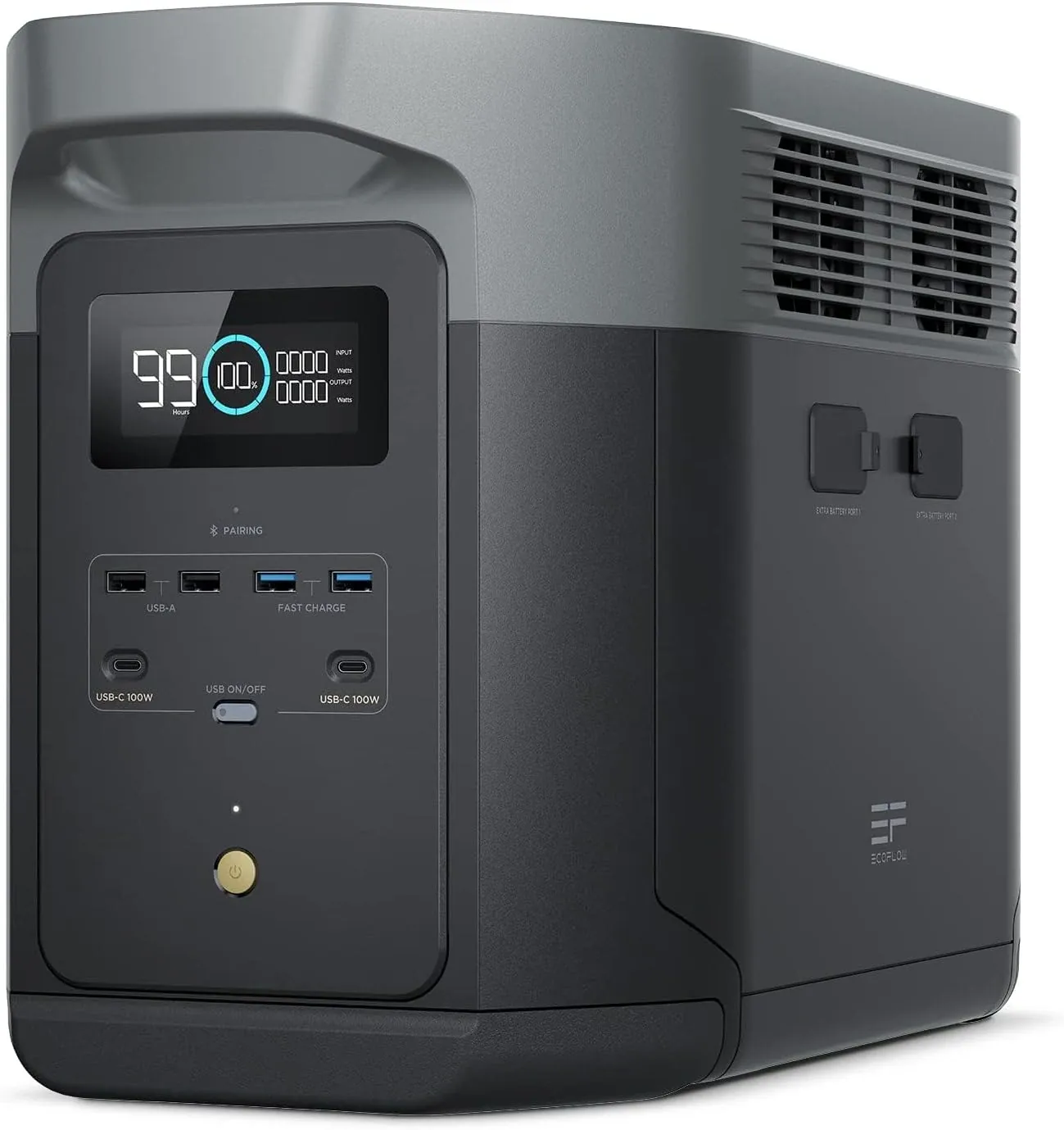
The Delta 2 Max matches the AC200L on capacity and inverter but leans into the multi-day case: 1,000W of solar input, expansion to 6,144Wh, and EcoFlow's polished app for watching exactly what's left and what's drawing it down. For an outage that might last days rather than hours, the ability to refill from panels by day while you draw it down by night is the whole game.
- Capacity
- 2,048 Wh (LiFePO4, expandable to 6,144 Wh)
- Inverter
- 2,400 W continuous · 3,400 W surge (X-Boost to 3,100 W)
- AC recharge
- Up to 1,900 W AC · ~1 hr to full
- Solar input
- 1,000 W max
- Weight
- 50 lbs
- Warranty
- 5 years
Why it works for home backup
If your outages come from winter storms or wildfire shutoffs that can run two or three days, recharge from the grid isn't the plan — the grid is gone. That makes solar input and expandability the priorities, and the Delta 2 Max is built around them: 1,000W of solar tops it up meaningfully in a single sunny afternoon, and the app's live drain readout takes the guesswork out of rationing. The 3,400W surge handles a fridge and a sump pump, and at 50 pounds it's more movable than the bigger units if you need to reposition it near a window for panels. X-Boost lets it run resistive loads up to 3,100W that the rated inverter wouldn't otherwise.
Pros
- 1,000W solar input — refills fast for multi-day off-grid essentials
- Expandable to 6,144Wh for longer outages
- Best app here for live drain monitoring and rationing
- 2,400W inverter / 3,400W surge for fridge + pump
- LiFePO4, 5-year warranty
Cons
- Pricier than the AC200L for similar base capacity
- Slightly slower AC recharge than the Bluetti
- Fan audible under sustained heavy load
The bottom line: The pick for outages measured in days, not hours. Strong solar input and expansion make it the best fit when grid recharge isn't an option.
Check price on Amazon →Best 2,000Wh Value
Jackery Explorer 2000 v2
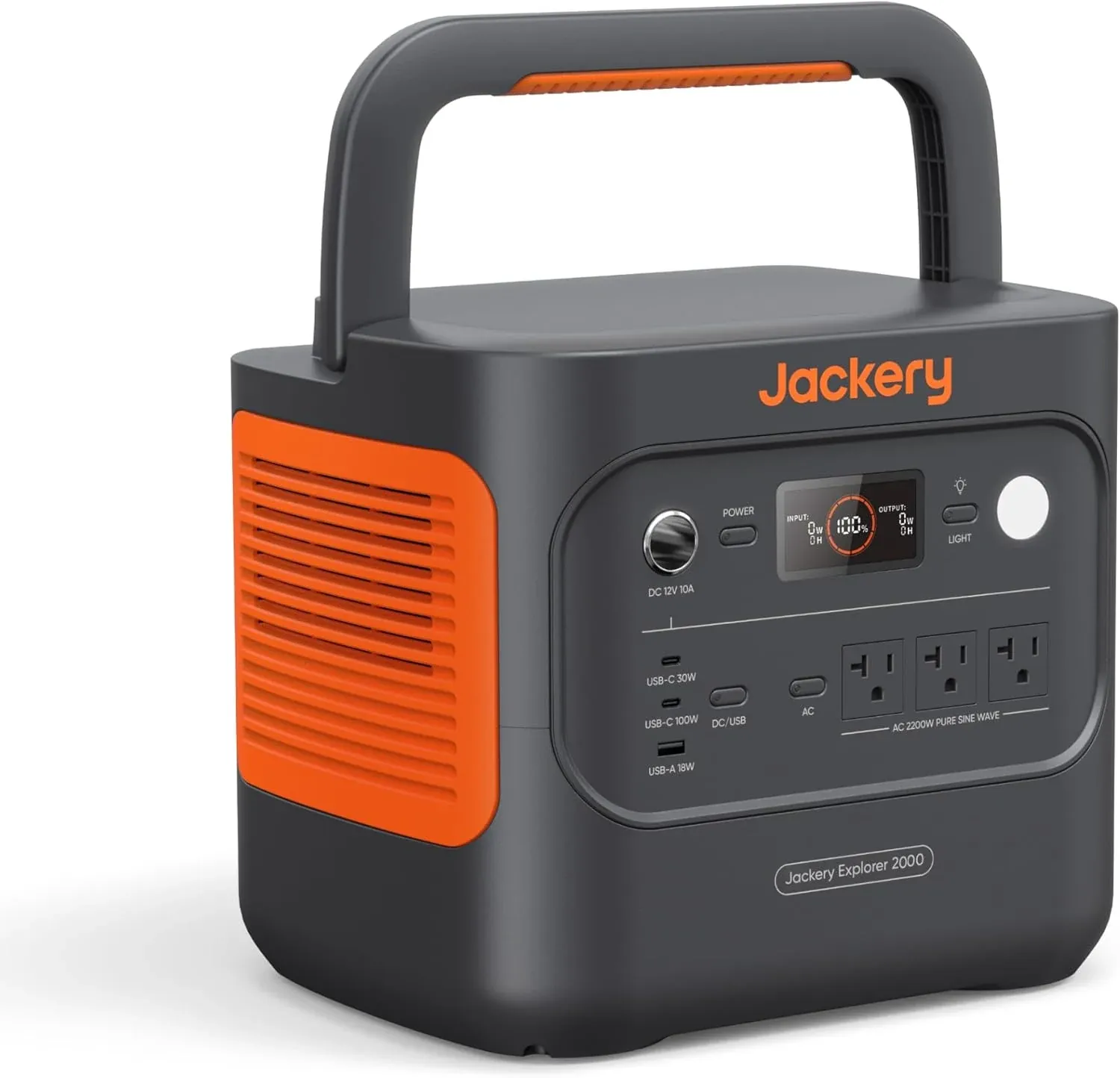
The Explorer 2000 v2 is the value play in the 2,000Wh class — usually the cheapest way to a full day of backup, and the lightest, at under 40 pounds. The headline number is the 4,400W surge, the highest relative to its rated inverter of anything here, which means it shrugs off the brief motor-start spikes that trip lesser units.
- Capacity
- 2,042 Wh (LiFePO4)
- Inverter
- 2,200 W continuous · 4,400 W surge
- AC recharge
- Up to 1,500 W AC · ~2 hrs to full
- Solar input
- 1,400 W max
- Weight
- 39.7 lbs
- Warranty
- 5 years
Why it works for home backup
For a homeowner who wants a single self-contained unit for a day of essentials and doesn't need the expansion ecosystem, the Explorer 2000 v2 is hard to argue with on price. The 4,400W surge is genuinely useful — it's the spec that decides whether your fridge and sump pump start cleanly, and Jackery gives you more headroom here than the rated 2,200W suggests. The big solar input (1,400W) means it pairs well with a panel array for longer events. The honest trade is that it doesn't expand: what you buy is what you have, so size it for your worst realistic outage up front. At 39.7 pounds it's the most movable 2kWh unit here.
Pros
- 4,400W surge — best surge-to-rating ratio here for motor loads
- Lightest 2,000Wh unit at 39.7 lbs
- Typically the lowest price for a full day of essentials
- 1,400W solar input pairs well with a panel array
- LiFePO4, 5-year warranty
Cons
- Not expandable — buy for your worst-case outage now
- Slower AC recharge than the EcoFlow and Bluetti rivals
- No 240V output
The bottom line: The best-value full-day backup if you don't need expansion. Big surge, light for its capacity, and usually the lowest price in the 2kWh class.
Check price on Amazon →Best Value Essentials
Anker SOLIX C1000
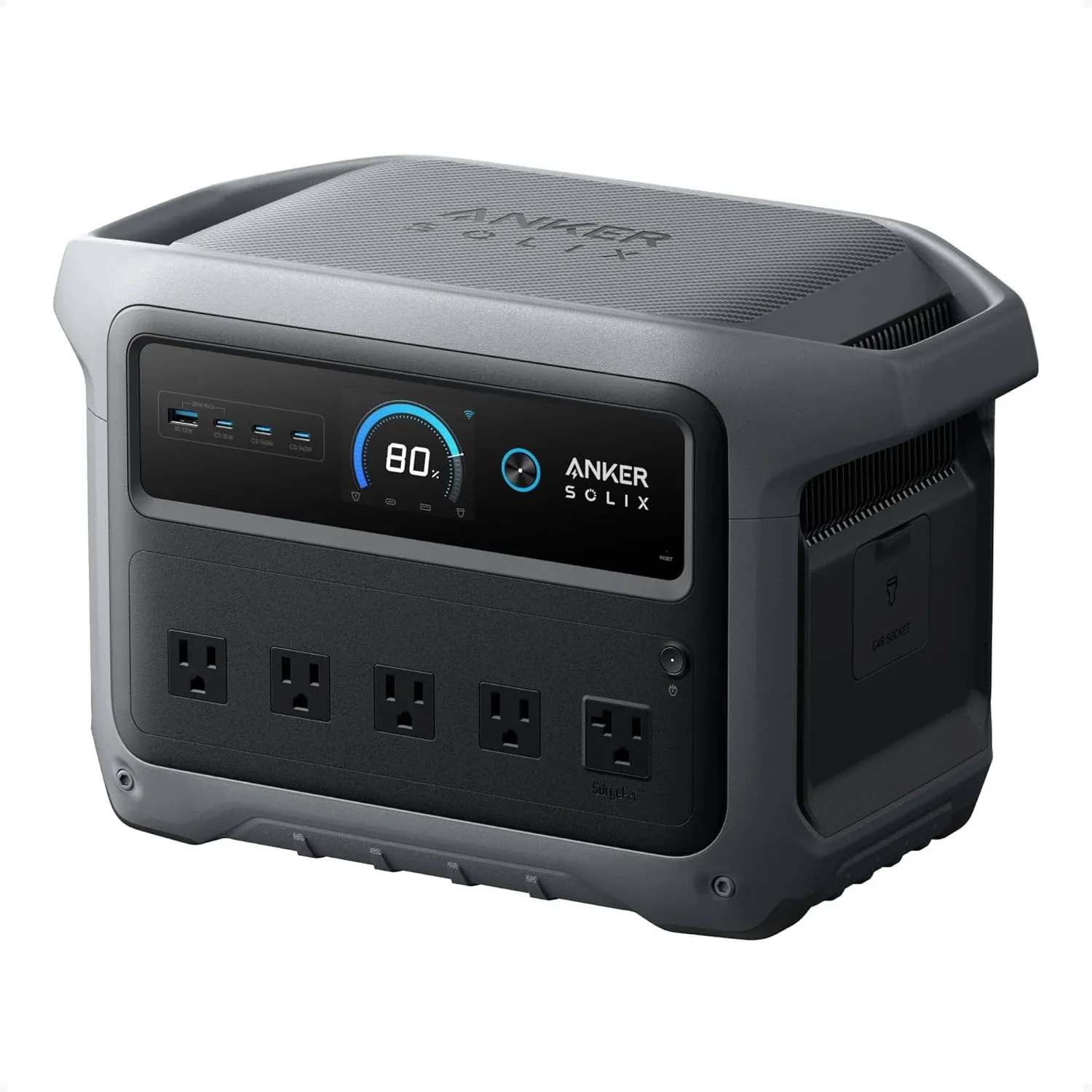
When the job is keeping a fridge, the internet, and a few devices alive through a short-to-medium outage — not running the whole house — the SOLIX C1000 is the value sweet spot. 1,056Wh, an 1,800W inverter that handles a microwave or kettle in short bursts, and UltraFast charging that refills it in about an hour, all at a price that's usually the lowest of the credible 1,000Wh units.
- Capacity
- 1,056 Wh (LiFePO4, expandable to 2,112 Wh)
- Inverter
- 1,800 W continuous · 2,400 W surge
- AC recharge
- Up to 1,300 W AC · ~1 hr to full
- Solar input
- 600 W max
- Weight
- 28.4 lbs
- Warranty
- 5 years
Why it works for home backup
Not every home needs 2,000Wh. If you live somewhere outages are measured in hours and you mainly need to ride out a fridge, the wifi, phones, and lights, 1,000Wh is the right size and the C1000 delivers it for the least money. The 1,800W inverter is high for the capacity — enough for a coffee maker or microwave between the steady loads — and the ~1-hour recharge means quick turnaround between events. It also takes one expansion pack to 2,112Wh if your needs grow. At 28.4 pounds it's genuinely portable around the house, basement to bedroom.
Pros
- Lowest price of the credible 1,000Wh units
- 1,800W inverter is high for the capacity
- UltraFast ~1-hour AC recharge
- Expandable to 2,112Wh with one pack
- Portable at 28.4 lbs, LiFePO4, 5-year warranty
Cons
- 1,056Wh covers essentials only, not a multi-appliance home
- 600W solar input trails the bigger units
- App less polished than EcoFlow or Bluetti
The bottom line: The value pick for essentials backup. The cheapest dependable way to keep a fridge and the basics running through a short outage, with a little room to grow.
Check price on Amazon →Best Budget Expandable
EcoFlow Delta 2
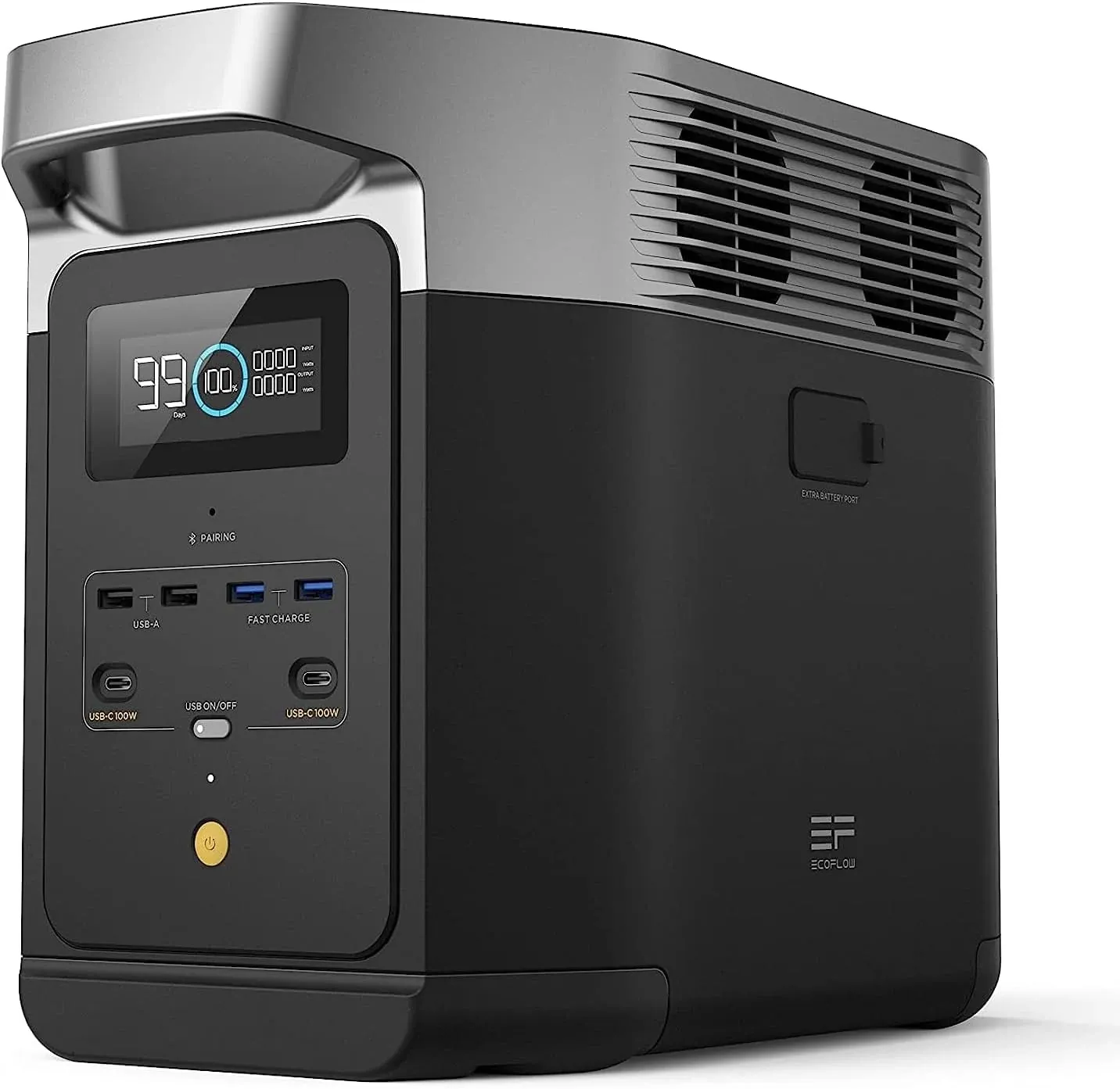
The Delta 2 is the unit I recommend to people who want the EcoFlow ecosystem and a real expansion path without paying for 2,000Wh up front. 1,024Wh base, expandable to 3,040Wh, the same fast charging and slick app as its bigger siblings, and a price that frequently dips on sale into impulse-buy territory for a first backup unit.
- Capacity
- 1,024 Wh (LiFePO4, expandable to 3,040 Wh)
- Inverter
- 1,800 W continuous · 2,700 W surge (X-Boost to 2,200 W)
- AC recharge
- Up to 1,200 W AC · ~80 min to full
- Solar input
- 500 W max
- Weight
- 27 lbs
- Warranty
- 5 years
Why it works for home backup
This is the smart starter unit for home backup: buy 1,024Wh now to cover essentials, and add a battery later if your needs grow to a full day or more — no need to rebuy the inverter or the app you already learned. The 2,700W surge starts a fridge, the 80-minute recharge is among the fastest at this capacity, and X-Boost runs resistive loads to 2,200W. The 500W solar input is modest but enough to stretch a long outage. At 27 pounds it moves easily. The one thing to watch is EcoFlow's pricing, which swings — buy it on a sale, not at list.
Pros
- Expandable to 3,040Wh — grow it as needs change
- Fast ~80-minute AC recharge for the capacity
- Strong app and ecosystem at an entry price
- 2,700W surge starts a fridge cleanly
- LiFePO4, 5-year warranty, 27 lbs
Cons
- 1,024Wh base is essentials-only until expanded
- 500W solar input is modest
- List price is high — wait for a sale
The bottom line: The best budget entry into a system you can grow. Start at 1,024Wh, expand to 3,040Wh, keep the same fast charging and app throughout.
Check price on Amazon →Best for Essentials Only
Bluetti AC180
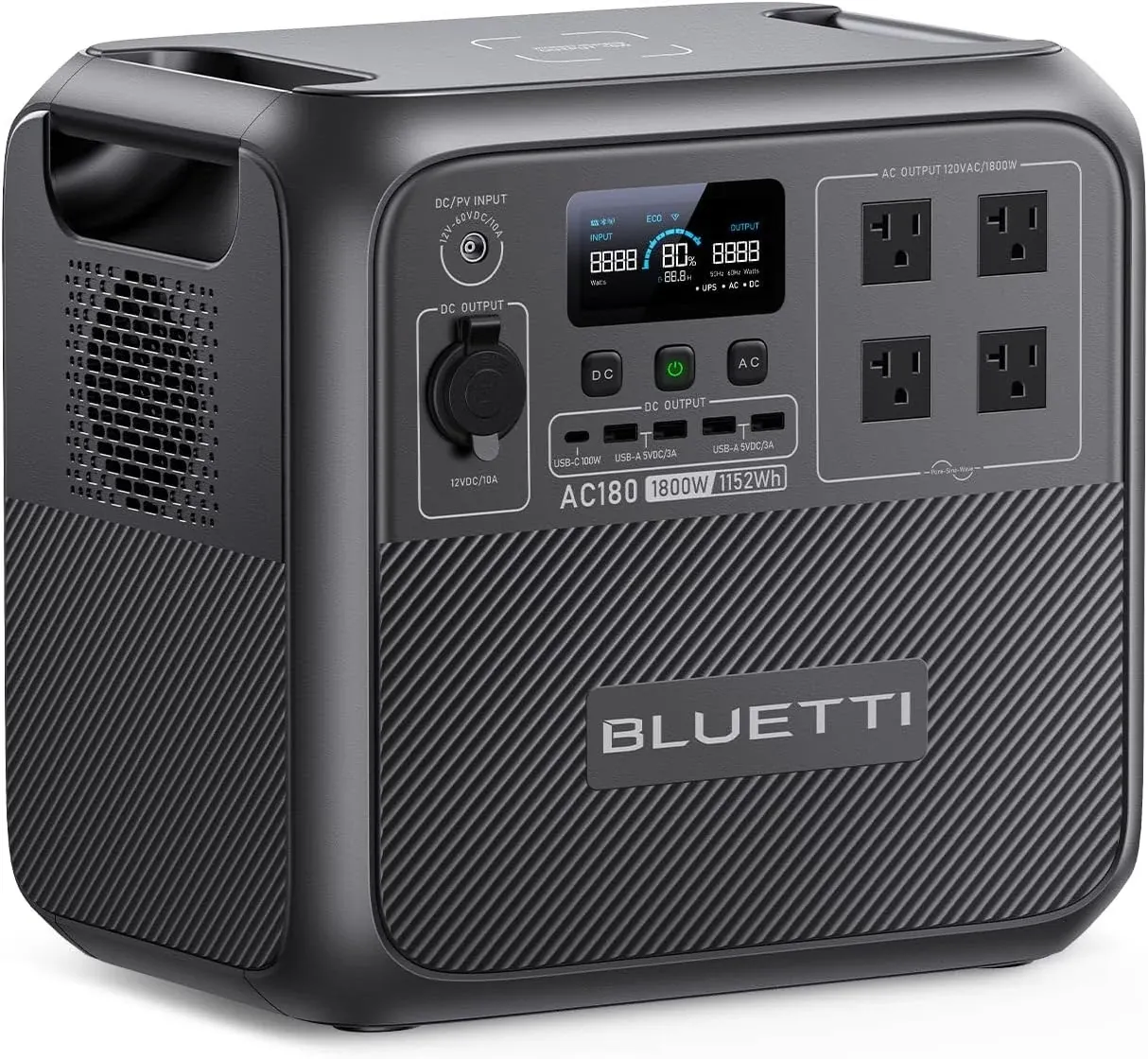
The AC180 is a simple, well-built 1,152Wh unit with a 20ms UPS mode that punches above its price for keeping essentials alive. It isn't expandable and the app is basic, but for a homeowner who wants one dependable box to run the fridge, the router, and a CPAP through an outage — and to do it without a learning curve — it's an easy recommendation.
- Capacity
- 1,152 Wh (LiFePO4)
- Inverter
- 1,800 W continuous · 2,700 W surge
- AC recharge
- Up to 1,440 W AC · ~1.3 hrs to full
- Solar input
- 500 W max
- Weight
- 37 lbs
- Warranty
- 5 years
Why it works for home backup
The standout for backup is the UPS switchover: at 20ms, the AC180 cuts over fast enough that a desktop, a router, or a medical device connected through it never notices the grid dropped. That's a feature usually reserved for pricier units. 1,152Wh is a touch more than the 1,000Wh class, the 2,700W surge starts a fridge, and the 1,440W recharge turns it around quickly. The limits are honest: no expansion, so size it right the first time, and a 500W solar input that's fine for topping up but not for fast off-grid refills. At 37 pounds it's movable but deliberate.
Pros
- 20ms UPS keeps a router, PC, or CPAP alive through a cutover
- 1,152Wh — a little more headroom than the 1,000Wh class
- Fast 1,440W AC recharge
- Simple, dependable, no learning curve
- LiFePO4, 5-year warranty
Cons
- Not expandable
- 500W solar input limits multi-day off-grid use
- Basic app, no ecosystem
The bottom line: The no-fuss essentials pick. A dependable box with fast UPS switchover for keeping the fridge, internet, and a medical device running through an outage.
Check price on Amazon →Best for Apartments & Small Spaces
Jackery Explorer 1000 v2
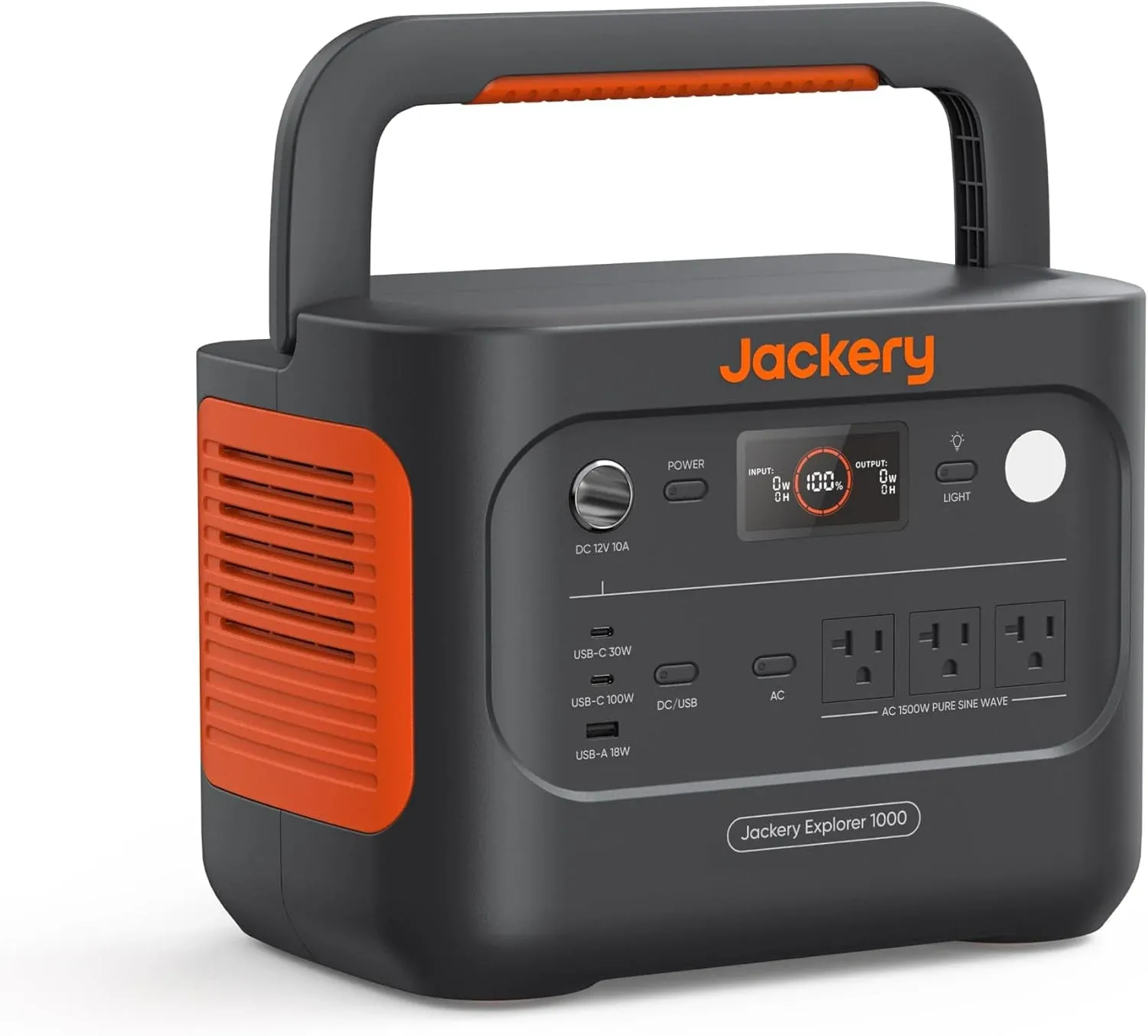
Not everyone backing up a home has a basement and a sump pump. For an apartment, a condo, or anyone who needs a backup unit that tucks into a closet and lifts with one hand, the Explorer 1000 v2 is the pick: 1,070Wh in the lightest package here at 23.8 pounds, with a 3,000W surge that belies its modest 1,500W rating.
- Capacity
- 1,070 Wh (LiFePO4)
- Inverter
- 1,500 W continuous · 3,000 W surge
- AC recharge
- Up to 1,500 W AC · ~1.7 hrs to full
- Solar input
- 400 W max
- Weight
- 23.8 lbs
- Warranty
- 5 years
Why it works for home backup
In a smaller home the calculus shifts — there's no well pump or chest freezer, the loads are a fridge, lights, electronics, and maybe a window AC or space heater in short bursts. The Explorer 1000 v2 covers exactly that, and its real advantage is livability: at 23.8 pounds it's trivial to move room to room or store out of sight, the fan is quiet enough for a studio apartment, and the 3,000W surge (double the rated output) starts a fridge or a vacuum without protest. It won't expand and the 400W solar input is the smallest here, so it's an essentials-and-short-outage unit — but for apartment life, that's the right tool.
Pros
- Lightest unit here at 23.8 lbs — closet-storable, one-hand carry
- 3,000W surge from a 1,500W inverter starts a fridge easily
- Quiet — suited to apartments and small spaces
- LiFePO4, 5-year warranty
Cons
- 1,500W continuous limits simultaneous heavy loads
- Not expandable, 400W solar input is the smallest here
- Essentials and short outages only
The bottom line: The apartment and small-space pick. Light, quiet, and closet-friendly, with enough surge to start a fridge — backup for homes without a basement full of pumps.
Check price on Amazon →How to choose a home backup power station
Size to your outage, not your house
The most common mistake is sizing a backup unit to the square footage of the home. What actually matters is how much you draw and for how long. Add up your essentials: a modern refrigerator averages about 140W when the compressor cycles, LED lights and a router add maybe 40–60W, phone and laptop charging another 30–60W. A realistic essentials load lands around 150–250W on average. Multiply by the hours you need to cover: a 12-hour outage at 200W is roughly 2,400 watt-hours of demand. Because you get about 85% of a unit's rated capacity at the outlets, a 2,000Wh station covers most of that — and in practice longer, because the fridge compressor only runs part of the time. Size to your typical outage, then decide how much margin your worst-case warrants.
Surge rating is what keeps the fridge alive
The single most overlooked spec in home backup is inverter surge. A refrigerator that averages 140W spikes to 800–1,200W for a fraction of a second every time the compressor starts; a sump pump or well pump can demand three to five times its running wattage on startup. A unit rated "1,800W continuous, 2,700W surge" handles a fridge; for a well pump you want more headroom, which is why the Delta Pro's 7,200W surge and the Explorer 2000 v2's 4,400W matter for homes with pumps. Below about 3,000W of surge, expect the occasional motor-start shutoff — which, in the middle of an outage, is exactly the failure you bought the unit to avoid.
Recharge speed: the spec that wins the second outage
Storms travel in bands and outages cluster. The grid comes back for three hours, then drops again — and if your unit recharges at 400W, you're caught at 30% when the second hit lands. This is where the Bluetti AC200L (2,400W AC) and the EcoFlow Delta 2 Max (~1,900W) earn their place: they refill from empty in roughly an hour to ninety minutes. When you're comparing two units of the same capacity, recharge speed is often the tiebreaker that matters most in a real multi-outage event.
UPS / EPS switchover for anything that can't blink
If you run a desktop computer, a home network, or a medical device, you want the unit between the wall and the device permanently, in UPS (or EPS) mode. When the grid drops, the station switches to battery — and the switchover time decides whether your equipment rides through or reboots. The fast units here, like the Bluetti AC200L and AC180, cut over in about 20 milliseconds, quick enough that a computer or router never notices. One honest caveat: these are line-interactive units, not true online double-conversion UPS systems, so for sensitive medical or lab equipment, confirm compatibility with the device maker before relying on it.
Expandability versus buying big now
You can pay for capacity two ways: buy a large unit up front, or buy a smaller expandable one and add batteries later. Expandable systems — the AC200L (to 8,192Wh), the Delta 2 Max (to 6,144Wh), the Delta 2 (to 3,040Wh) — let you start at a day of essentials and grow into multi-day backup without rebuying the inverter. The fixed units (the Jackery Explorer models, the AC180) are often cheaper per watt-hour today but lock you in, so size them for your worst realistic outage at purchase. If your needs are stable, buy fixed and save; if they might grow, the expansion path is worth the premium.
The 240V / whole-home question, answered honestly
It's the question every shopper eventually asks: can one of these run my whole house? The honest answer is no — not central AC, not an electric range, not an electric water heater. Those are 240V loads that draw far more than even a 3,600W inverter delivers. What the largest unit here, the Delta Pro, can do through EcoFlow's Smart Home Panel is back up a selection of essential circuits — the fridge, the furnace blower, a well pump, lights, and outlets — which is "whole-essentials" backup, not whole-house. For true whole-house coverage including HVAC, the right tool is a hardwired standby generator or a home battery system, a different category entirely. We compare the approaches in our solar generator vs gas generator guide.
How long these run an outage
Watt-hours only mean something once you translate them into hours of your actual house. Two numbers do that honestly. First, you never get the full nameplate capacity: after inverter losses, plan on about 85% as usable energy at the outlets. Second, you need realistic household draw figures — so here are the ones we use: a refrigerator averages about 140W over a cycle, a broader "essentials" set (fridge + LED lights + wifi/router + phone and laptop charging) averages roughly 220W, and a CPAP with the humidifier off averages about 30W (≈240Wh per 8-hour night).
| Capacity tier | Fridge only | Full essentials | CPAP nights* |
|---|---|---|---|
| ~1,000 Wh C1000, Delta 2, AC180, Explorer 1000 v2 | ~10–12 hrs | ~6–9 hrs | ~3–4 nights |
| ~2,000 Wh AC200L, Delta 2 Max, Explorer 2000 v2 | ~20–24 hrs | ~13–18 hrs | ~6–8 nights |
| 3,600 Wh EcoFlow Delta Pro | ~36–42 hrs | ~24–30 hrs | ~12–14 nights |
*CPAP figures assume the humidifier and heated hose are off — standard advice for battery use, since they can triple the draw.
The fridge-only column understates real life, and usefully so: a compressor cycles on and off rather than running continuously, so a unit that shows "~10–12 hours" of fridge backup often carries a well-stocked, rarely-opened fridge through a longer outage because the compressor is idle much of the time. The lesson the table teaches is the one that decides most purchases: a 1,000Wh unit is an essentials-for-an-evening tool, a 2,000Wh unit covers a full day, and only at 3,600Wh-plus — or with solar refilling by day — do you get into multi-day territory without rationing. If your outages routinely run past a day, plan for solar from the start; see our solar panel pairing guide.
Which unit for your situation
The right pick depends less on brand than on what you're protecting and for how long:
| Your situation | Recommended pick | Why |
|---|---|---|
| Apartment / condo, short outages | Jackery Explorer 1000 v2 | Light, quiet, closet-storable. Runs a fridge, internet, and devices through a few hours with no basement loads to worry about. |
| Suburban home, essentials only | Anker SOLIX C1000 | Cheapest dependable way to ride out a short outage on fridge, wifi, lights, and phones — with one expansion pack in reserve. |
| Work-from-home / medical device | Bluetti AC180 | 20ms UPS switchover keeps a desktop, router, or CPAP alive seamlessly the instant the grid drops. |
| Full day of essentials, fast turnaround | Bluetti AC200L | 2,048Wh for a day of backup and a 2,400W recharge that refills it in ~90 minutes between storm bands. |
| Multi-day outage with solar | EcoFlow Delta 2 Max | 1,000W solar input and expansion to 6,144Wh — refill by day, draw down by night, indefinitely on essentials. |
| Best value for a full day | Jackery Explorer 2000 v2 | Usually the lowest price in the 2kWh class, lightest at under 40 lbs, and the biggest surge for motor starts. |
| Whole-essentials / well pump / multi-appliance | EcoFlow Delta Pro | 3,600Wh, 7,200W surge, and the only real path to whole-home through extra batteries and a Smart Home Panel. |
Home backup overlaps with off-grid solar power — if you want a unit that spends as much time charging from panels as backing up the house, our best solar power generators roundup is the companion list, and the refrigerator runtime guide digs into the single most common backup load. Every figure here follows our testing methodology.
How we test power stations for home backup
Home backup rewards different things than camping or RV use, so we judge these units against the outage scenario specifically. The headline test is a 24-hour real-world runtime with a measured residential load set — a refrigerator cycling at a 140W average, LED lighting, a router and modem, phone and laptop charging, and a CPAP — run until the unit cuts off, with the delivered watt-hours logged against the nameplate so we report usable capacity, not the box number.
We then stress the inverter the way a house does: repeated high-surge starts from a refrigerator compressor and, where relevant, a pump, to confirm the unit doesn't trip on motor inrush. We time AC recharge to both 80% and 100% (the last 20% often throttles), measure UPS/EPS switchover where the unit supports it, and note discharge noise — because a fan that's irrelevant in a garage matters at 3 a.m. in a quiet house. The full process lives in our testing methodology.
Home backup mistakes to avoid
Most backup disappointments trace to a handful of avoidable errors, not to the hardware:
- Sizing to the house, not the outage. You don't power square footage — you power a load for a number of hours. Add up your essentials draw and multiply by realistic outage length before you shop.
- Ignoring surge rating. A unit that "matches" your fridge's running watts on paper can still trip on the compressor's startup spike. Buy for the surge, not the average.
- Forgetting recharge speed. Outages cluster. A slow-charging unit that's still at 30% when the second hit lands is a unit that failed when you needed it most.
- Expecting whole-home performance. No portable unit runs central AC, an electric range, or an electric water heater. Plan around essentials, or buy a standby generator.
- Skipping solar for multi-day risk. If your outages can run past a day, batteries alone mean rationing. A matched panel turns a one-day unit into an indefinite one.
- Storing it discharged. A backup unit kept dead in a closet is useless when the power fails. Keep it at 50–80% charge, top it up every few months, and never let a stored unit fall below 20%.
Frequently asked questions
What is the best home backup power station?
For most homes the Bluetti AC200L is the best all-round pick: 2,048Wh covers a full day of essentials, the 2,400W inverter runs nearly any household appliance short of HVAC, and it recharges in about 90 minutes so it is ready before the next storm band. If you need to back up more than essentials — a well pump, a chest freezer, multiple appliances at once — the EcoFlow Delta Pro (3,600Wh, 7,200W surge, expandable toward whole-home) is the stronger choice. For essentials-only or apartment use, the Anker SOLIX C1000 and Jackery Explorer 1000 v2 cover the basics for less.
What size power station do I need for home backup?
Size to the length of your typical outage, not the size of your house. Estimate your essentials draw — a modern fridge averages about 140W when cycling, plus lights, internet, and device charging brings a realistic essentials load to roughly 150–250W on average. Multiply by the hours you need: a 12-hour outage at 200W average is about 2,400Wh of demand, so a 2,000Wh unit (accounting for ~85% usable capacity) covers most of it and a fridge cycling part-time stretches it further. For multi-day outages, pair a 2,000Wh+ unit with solar rather than buying ever-larger batteries.
Can a portable power station run a whole house?
Not in the way a standby generator does. No portable unit here will run central air conditioning, an electric water heater, or an electric range — those draw far more than even a 3,600W inverter delivers, and many are 240V loads. What the largest unit here, the EcoFlow Delta Pro, can do is back up a panel's worth of essential circuits through a Smart Home Panel: the fridge, furnace fan, well pump, lights, and outlets. That is 'whole-essentials' backup, not 'whole-house.' True whole-house backup means a hardwired standby generator or a home battery system like a Powerwall.
Will a power station run my refrigerator during an outage?
Yes — a refrigerator is one of the most common home-backup loads and every unit here handles it. A modern fridge averages roughly 140W when the compressor cycles, but it spikes to 800–1,200W for a fraction of a second on start, which is why inverter surge rating matters more than continuous rating for this load. All eight units have enough surge to start a household fridge cleanly. On runtime, a 1,000Wh unit carries a fridge roughly 10–12 hours and a 2,000Wh unit a full day, longer in practice because the compressor only runs part of the time. We cover the math in our guide on whether a power station can run a refrigerator.
What is a UPS or EPS switchover, and why does it matter for home backup?
It is how fast the unit takes over when grid power drops. Plug a device into the station's AC outlet while the station is itself plugged into the wall, and when the grid fails the station switches to battery — but not instantly. The switchover time (UPS or EPS mode) is typically 10–30ms on the units here that support it, like the Bluetti AC200L and AC180 (~20ms). That is fast enough that a desktop computer, router, modem, or many medical devices never lose power or reboot. It matters if you work from home or run critical equipment. Note these are line-interactive, not true online UPS units — verify compatibility for sensitive medical or lab equipment.
How do I recharge a home backup power station during a long outage?
If the grid is up, recharge from the wall — the AC200L and Delta 2 Max refill in 1–1.5 hours, which is why recharge speed matters between storm bands. If the grid is down for days, solar is the only option: a 400–1,200W panel array matched to the unit tops it up during daylight while you draw it down overnight. Units with high solar input (the Delta Pro at 1,600W, Explorer 2000 v2 at 1,400W, Delta 2 Max at 1,000W) refill fastest from panels. You can also trickle-charge smaller units from a vehicle 12V outlet in a pinch. See our solar panel pairing guide for matching panels to a unit.
Is a portable power station safe to use indoors during an outage?
Yes. Unlike a gas generator — which produces carbon monoxide and must never run indoors or in a garage — a portable power station is a sealed battery with an inverter and no exhaust, so it is completely safe inside the house. That indoor safety is the main reason power stations have largely replaced small gas generators for essentials backup. The only practical consideration is fan noise during heavy discharge, which can be noticeable in a quiet bedroom but is otherwise harmless.
Do I need a transfer switch or an electrician to use one?
For most people, no. The standard way to use a portable power station for backup is to plug appliances directly into its AC outlets with extension cords — no wiring, no electrician. The exception is whole-essentials backup of hardwired circuits (like a furnace or well pump), which does require professional installation: EcoFlow sells a Smart Home Panel for the Delta Pro, and a licensed electrician installs a manual transfer switch for other units. If you only need to keep a fridge, electronics, and lights running, skip the install and use the outlets directly.
Final verdict
The best home backup power station is the one sized to your outage and built to start your appliances and refill between hits. For most homes that's the Bluetti AC200L — a full day of essentials, an inverter that runs nearly anything short of HVAC, and a recharge fast enough to beat the next storm band. Need to cover more than essentials, including a well pump or several appliances at once? The EcoFlow Delta Pro is the strongest unit here and the only one with a credible path toward whole-essentials backup. Facing multi-day outages? The Delta 2 Max's solar input and expansion are built for it.
On the lighter end, the Jackery Explorer 2000 v2 is the value play for a full day of backup, the Anker SOLIX C1000 and EcoFlow Delta 2 cover essentials affordably with room to grow, and the AC180 and Explorer 1000 v2 handle apartment-scale needs. Match the unit to how long your power actually goes out, what you need to keep running, and how fast you need to recharge — get those three right, and any pick here will keep the lights on and the fridge cold when the grid can't.